
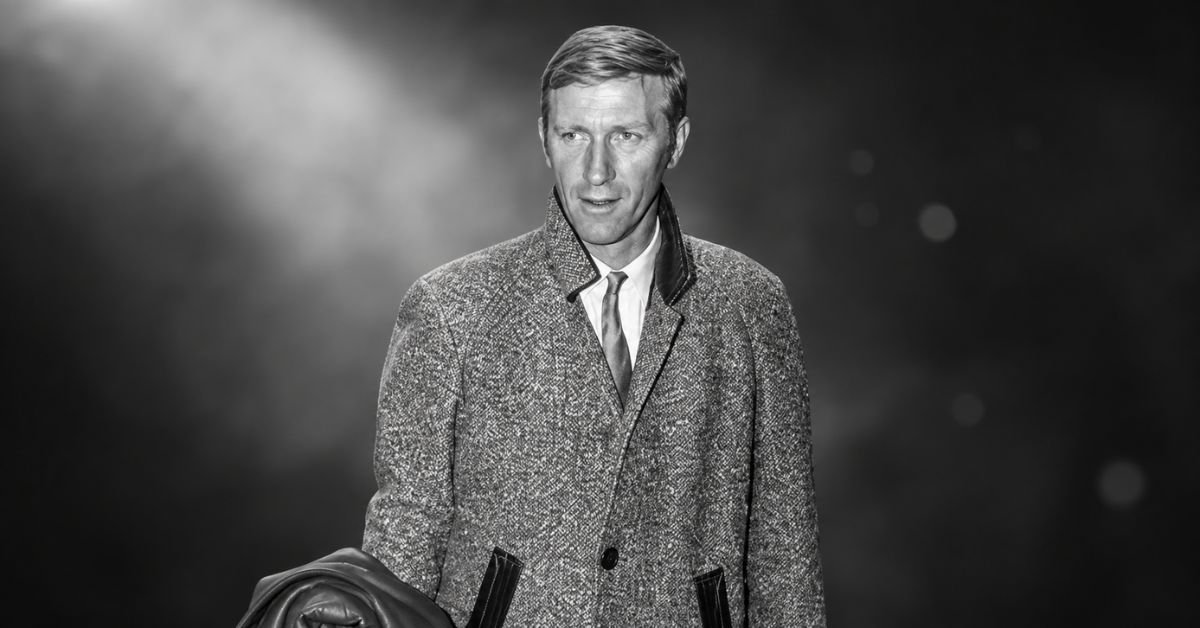
Quick Answer: Jack Charlton (1935–2020) was an English professional footballer who won the 1966 FIFA World Cup with England and later became one of the most celebrated managers in international football history. As Republic of Ireland manager from 1986 to 1995, Charlton transformed Irish football, guiding the team to its first-ever World Cup appearances. He died on July 10, 2020, from lymphoma.
Quick Facts
| Detail | Information |
|---|---|
| Full Name | John Charlton |
| Nickname | Big Jack |
| Date of Birth | May 8, 1935 |
| Place of Birth | Ashington, Northumberland, England |
| Date of Death | July 10, 2020 |
| Age at Death | 85 |
| Cause of Death | Lymphoma (also diagnosed with dementia) |
| Nationality | English |
| Position | Central defender |
| Club Career | Leeds United (1952–1973) |
| International Career | England (1965–1970), 35 caps |
| Management Career | Middlesbrough, Sheffield Wednesday, Newcatle United, Republic of Ireland |
| Major Honors | 1966 FIFA World Cup (player); First Division title 1969 (Leeds); Republic of Ireland – UEFA European Championship 1988 (qualifier), 1990 & 1994 FIFA World Cup (manager) |
| Brother | Bobby Charlton |
| Wife | Pat Kemp (married 1958) |
| Children | Three: John, Deborah, and Peter |
Few figures in British football carry the weight of Jack Charlton’s story. A miner’s son from Northumberland who became a World Cup winner, a disciplinarian manager who was adored by an entire nation that wasn’t even his own—Charlton’s life was as rich and contradictory as the sport itself.
This is the full account of the man they called “Big Jack”: where he came from, what he built, who he loved, and how he left.
Early Life: Growing Up in Ashington
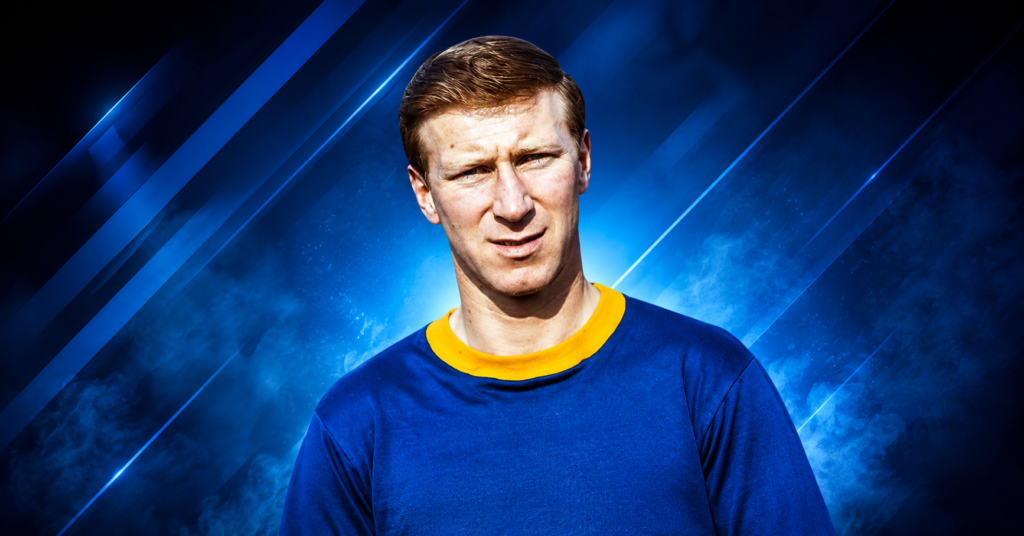
John Charlton was born on May 8, 1935, in Ashington, a small coal-mining town in Northumberland, England. He was the eldest of four sons born to Robert and Cissie Charlton, and from the start, football ran through the family like a seam of coal through the earth. His mother, Cissie, came from the Milburn family—a footballing dynasty that produced Newcastle United and England striker Jackie Milburn, her cousin.
Jack and his younger brother Bobby both inherited the Milburn gift. But while Bobby became the elegant, golden-haired symbol of English football, Jack was always the grafting, uncompromising older brother—the one who did the dirty work without needing the applause.
He left school at 15 and briefly worked as a coal miner before signing as a professional with Leeds United in 1952, at the age of 17.
Career Timeline: From Leeds to Wembley to Dublin
1952–1973: Nearly Two Decades at Leeds United
Jack Charlton spent his entire professional playing career at Leeds United—21 years, over 770 appearances, and a loyalty to the club that is almost unheard of in modern football.
When Don Revie took over as Leeds manager in 1961, the club was a mid-table Second Division side threatening relegation. Revie reorganized the team, with Charlton at the heart of the defense alongside Norman Hunter. Together, they formed one of the most feared central defensive partnerships in English football history.
Under Revie, Leeds won the First Division title in 1969 and the FA Cup in 1972. Charlton was the backbone of a side that was often described as ruthless—effective to the point of cynicism, but undeniably successful. His physical presence, aerial dominance, and meticulous positional understanding made him one of the best defenders of his generation.
1965–1970: Winning the World Cup with England
Despite his success at club level, Jack Charlton received his first England senior call-up relatively late—at the age of 29, in 1965. He went on to earn 35 caps for his country, all under manager Alf Ramsey.
The peak came on July 30, 1966. At Wembley Stadium, England defeated West Germany 4–2 in the FIFA World Cup Final. Jack and Bobby Charlton became the only pair of brothers to win the World Cup together on English soil—a fact that has never been repeated.
Jack reportedly wept on the pitch at full-time, an image that surprised many who knew him as a tough, unsentimental man.
He retired from international football in 1970, following England’s quarter-final exit at the Mexico World Cup.
1973–1985: Management Career in England
After retiring as a player, Charlton moved into management with immediate effect. His first appointment came at Middlesbrough in 1973, and within his first season he had won them promotion from the Second Division. He was named the Football Writers’ Association Manager of the Year in 1974.
He went on to manage Sheffield Wednesday (1977–1983) and Newcastle United (1984–1985), with mixed but largely respectable results. His work in England established him as a capable, no-nonsense manager—but it was his next appointment that would define his legacy.
1986–1995: The Republic of Ireland Years
In February 1986, Jack Charlton was appointed manager of the Republic of Ireland national team—a decision that initially surprised many. He was English, had no prior connection to Ireland, and was not the Football Association of Ireland’s first choice.
What followed was one of the most remarkable managerial tenures in the history of international football.
Charlton implemented a direct, high-pressing style that prioritized organization and physical effort over flair. Critics, including some within the Irish football community, found the approach agricultural. The results, however, were undeniable.
Key achievements with the Republic of Ireland:
- UEFA Euro 1988 – Ireland qualified for their first-ever major tournament, finishing in the group stage but famously defeating England 1–0 in Stuttgart
- 1990 FIFA World Cup (Italy) – Ireland reached the quarter-finals, their best-ever World Cup finish, before losing to the host nation
- 1994 FIFA World Cup (USA) – Ireland qualified again and reached the round of 16, defeating Italy 1–0 in the group stage—a result widely remembered as one of the greatest upsets in World Cup history
Charlton was made an honorary Irish citizen in 1996 in recognition of what he had done for the country. In Ireland, he remains a figure of almost mythological affection. He was not just a football manager—he was credited with giving the Irish public something to celebrate during an economically difficult period in the country’s history.
He resigned as manager in December 1995, following Ireland’s failure to qualify for Euro 1996. He was 60 years old.
Family Life: Pat, the Children, and the Fishing Rods
Away from football, Jack Charlton was known as a devoted family man and an obsessive angler. He married Pat Kemp in 1958, and the couple remained together for over 60 years until his death. Pat was consistently described by those close to the family as the steady hand behind Charlton’s turbulent career.
They had three children: John, Deborah, and Peter. Jack spoke warmly of his family in interviews throughout his life, though he was notably private about personal matters compared to his more publicly celebrated brother, Bobby.
Charlton’s love of fishing—particularly fly fishing for salmon and trout—was well-documented. He spoke about it with the same enthusiasm he reserved for football, and in his retirement years it occupied much of his time. He fished rivers across the British Isles and Ireland and was known to disappear for days at a time on fishing trips.
The Relationship with Bobby Charlton
The relationship between Jack and Bobby Charlton was one of football’s most complicated sibling dynamics. Both were World Cup winners. Both were England legends. But they were profoundly different people, and for much of their adult lives, their relationship was reportedly strained.
Jack was direct and sometimes blunt to the point of abrasiveness. Bobby was more reserved and carried a survivor’s weight from the 1958 Munich air disaster, which claimed the lives of several of his Manchester United teammates. The brothers’ differing temperaments created friction that reportedly lasted decades.
In later interviews, Jack acknowledged the distance. He told the BBC that he and Bobby were not especially close, and that they had different lives and different ways of seeing the world. Those close to both men suggested there was warmth beneath the surface, but neither was inclined to romanticize it publicly.
Bobby survived Jack by two years, passing away in October 2022.
Cause of Death: Lymphoma and Dementia
Jack Charlton died on July 10, 2020, at the age of 85. His family confirmed that he had been living with lymphoma—a cancer of the lymphatic system—and had also been diagnosed with dementia in the years prior to his death.
The announcement of his dementia diagnosis, which came before his death, prompted renewed public discussion about the link between professional football and neurodegenerative disease. Research published by the University of Glasgow in 2019, involving former professional footballers, found that they were approximately three and a half times more likely to develop dementia than age-matched members of the general population. The study pointed to repeated heading of the football as a likely contributing factor.
Charlton’s family did not explicitly attribute his dementia to football, but his case drew attention to the issue alongside those of other England 1966 World Cup teammates, including Nobby Stiles and Martin Peters, who also developed dementia.
He died peacefully at home, surrounded by family. Tributes poured in from England and Ireland, with the tone in Ireland particularly emotional. Irish Taoiseach Micheál Martin described Charlton as someone who “captured the hearts of the Irish people.”
Legacy: What Jack Charlton Left Behind
Jack Charlton’s legacy operates on at least two distinct levels.
As a player, he was one of England’s finest defenders of the 1960s—a World Cup winner who spent 21 years at one club and helped build one of the most formidable teams of the era under Don Revie.
As a manager, his legacy is arguably greater. He took international football to a country that had never experienced it at the highest level and gave Irish supporters moments they still recall with fierce pride. The 1-0 win over England at Euro 1988. The quarter-final run in Italy. Ray Houghton’s volley against Italy in New Jersey in 1994.
Beyond the results, Charlton gave Ireland a collective identity around football that persisted long after he left. The green jersey meant something different after 1986 than it did before.
In a 2020 tribute published by the BBC, former Republic of Ireland captain Andy Townsend described Charlton as “the man who made us believe.” That sentiment, repeated by dozens of players and supporters in the days following his death, captures what made Charlton unusual: the ability to instill belief in people who had been conditioned not to expect too much.
He was inducted into the English Football Hall of Fame in 2005.
Where to Go From Here
Jack Charlton’s story is well-documented in several authoritative sources. His 1996 autobiography, Jack Charlton: The Autobiography, covers his playing career and early management years in his own words. The 2020 documentary Finding Jack Charlton, directed by Gabriel Clarke and produced while Charlton was living with dementia, offers an intimate and deeply moving portrait of the man in his final years—and is widely recommended for anyone wanting to understand who he was beyond the results.
For readers interested in the broader question of dementia in football, the University of Glasgow’s 2019 FIELD Study (Football’s InfluencE on Lifelong health and Dementia risk) is the most cited academic source on the subject.
Charlton did not seek mythology. He was a pragmatist who wanted clean sheets and hard work. The mythology came anyway.
Frequently Asked Questions About Jack Charlton
What was Jack Charlton’s cause of death?
Jack Charlton died on July 10, 2020, from lymphoma, a cancer of the lymphatic system. He had also been diagnosed with dementia in the years before his death. He was 85 years old at the time of his passing.
Did Jack Charlton win the 1966 World Cup?
Yes. Jack Charlton was part of the England squad that defeated West Germany 4–2 in the 1966 FIFA World Cup Final at Wembley Stadium. He and his brother Bobby Charlton are the only siblings to have won the World Cup together on English soil.
Why is Jack Charlton so beloved in Ireland?
Charlton managed the Republic of Ireland national team from 1986 to 1995, guiding the country to its first-ever major tournament (UEFA Euro 1988) and two FIFA World Cup appearances (1990 and 1994). He is credited with transforming Irish football and uniting the country during a difficult economic period. He was made an honorary Irish citizen in 1996.
How long did Jack Charlton manage the Republic of Ireland?
Charlton managed the Republic of Ireland for approximately nine years, from February 1986 to December 1995. He resigned following the team’s failure to qualify for UEFA Euro 1996.
Was Jack Charlton related to Bobby Charlton?
Yes. Jack and Bobby Charlton were brothers. Both played for England and won the 1966 FIFA World Cup. Bobby also played for Manchester United throughout his club career. Bobby Charlton died in October 2022.
Did Jack Charlton’s dementia have a connection to football?
Jack Charlton’s family did not make a definitive public statement linking his dementia to his football career. However, his diagnosis contributed to wider public discussion about the issue. A 2019 study by the University of Glasgow found that former professional footballers were approximately 3.5 times more likely to develop dementia than the general population, with repeated heading identified as a probable contributing factor.

Sophia Carter is an entertainment journalist and celebrity culture writer with a passion for covering Hollywood news, celebrity biographies, lifestyle trends, and pop culture stories. She specializes in researching public figures, industry developments, and trending entertainment topics to create engaging, accurate, and reader-friendly content. Through her work, Sophia aims to provide readers with well-researched insights and timely updates from the world of entertainment.