
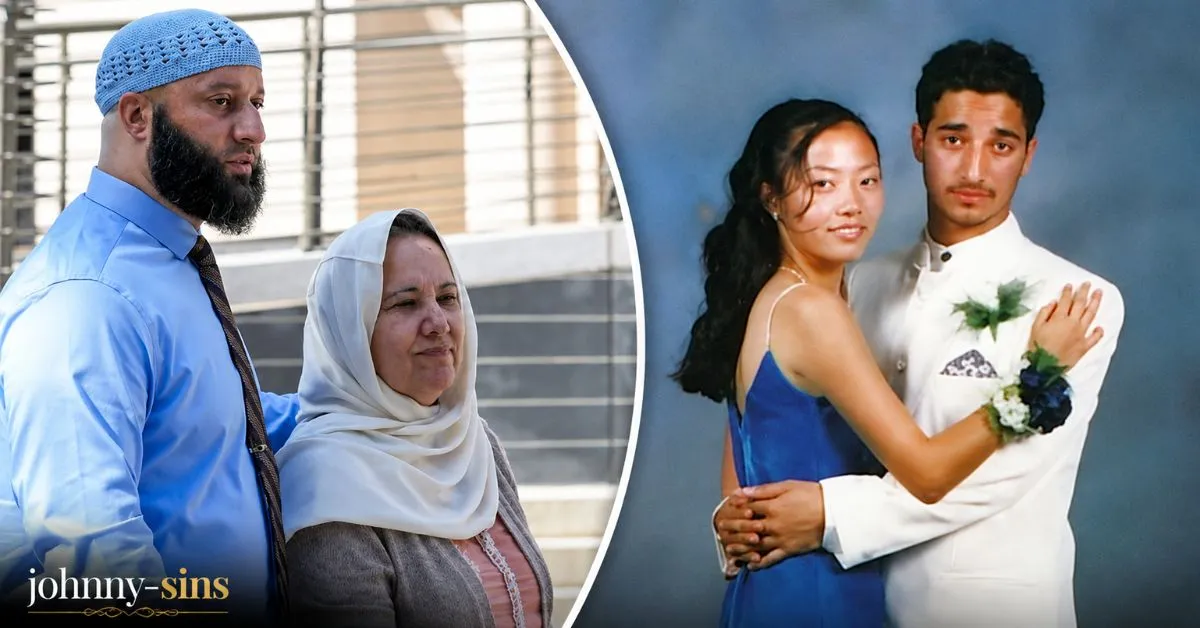
Quick answer: Adnan Syed is an American man who was convicted in 2000 of the murder of his ex-girlfriend Hae Min Lee in Baltimore, Maryland. His case became internationally known after the 2014 Serial podcast cast doubt on his conviction. In 2022, a Baltimore judge vacated his conviction, though legal proceedings have continued since.
Few criminal cases in modern American history have generated the kind of sustained, fevered attention that surrounds Adnan Syed. What began as a local Baltimore tragedy — the 1999 disappearance and murder of 18-year-old Hae Min Lee — eventually became the subject of a landmark podcast, multiple documentary series, and a prolonged legal battle that raised urgent questions about the reliability of eyewitness testimony, prosecutorial disclosure obligations, and what justice actually looks like when a system fails.
This is not a story with a tidy ending. It is a story still unfolding, shaped by grief, legal complexity, and the enduring power of public scrutiny. Understanding Adnan Syed means understanding the full arc of his life — from a quiet childhood in Baltimore’s Pakistani-American community to the center of one of the most discussed true crime cases of the 21st century.
This biography covers who Adnan Syed is, what happened in his case, how the Serial podcast changed everything, and where the legal situation stands today.
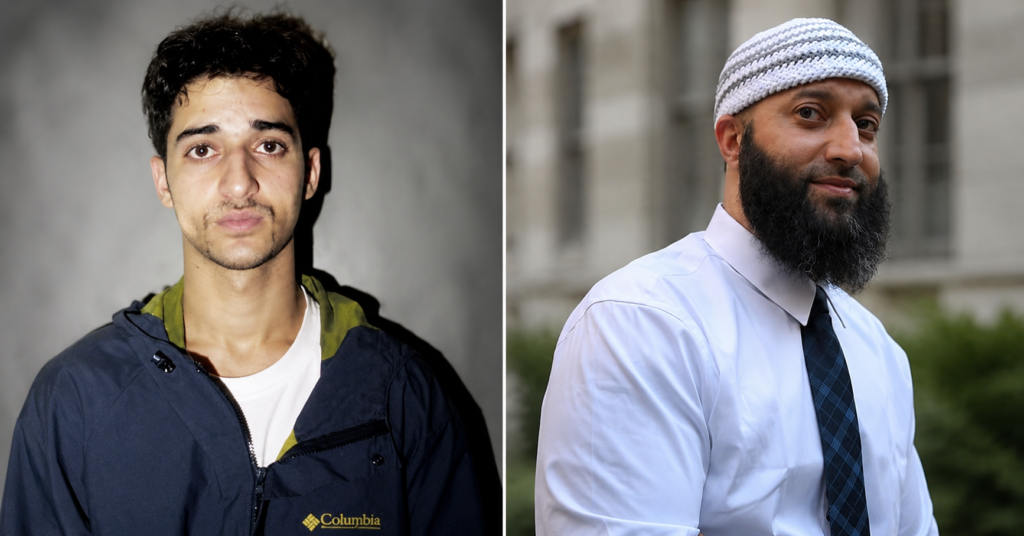
Biography Snapshot
| Full Name | Adnan Masud Syed |
| Known As | Adnan Syed |
| Date of Birth | May 21, 1981 |
| Age | 44 (as of 2025) |
| Birthplace | Baltimore, Maryland, USA |
| Nationality | American |
| Profession | Advocacy and community work (post-release); formerly incarcerated |
| Years Active (Legal Case) | 1999–present |
| Known For | Subject of the Serial podcast; 2000 murder conviction; 2022 conviction vacatur |
| Relationship Status | Not publicly disclosed |
| Children | None publicly known |
| Education | Woodlawn High School (Baltimore); earned college credits while incarcerated |
| Net Worth | Not publicly known |
| Social Media | No verified public accounts |
Early Life and Background: Growing Up Between Two Worlds
Adnan Masud Syed was born on May 21, 1981, in Baltimore, Maryland, to Pakistani immigrant parents. His family was deeply embedded in the local Muslim community — his father, Syed, worked to support the family while his mother, Shamim, maintained a traditional household rooted in Islamic values and culture.
Growing up in the Woodlawn area of Baltimore, Adnan occupied a complicated social space. At school, he was described by teachers and classmates as charismatic, academically capable, and genuinely well-liked. He served as vice president of his junior class. He was a star athlete on the school’s track team. At the same time, he navigated the pressure of a conservative household while living the social life of a typical American teenager — attending parties, dating, and building friendships that crossed racial and cultural lines.
This duality is important context for everything that followed. Adnan’s defense team would later argue that cultural misunderstandings — particularly around the nature of his relationship with Hae Min Lee — played into how the prosecution constructed its narrative about motive.
Hae Min Lee was also a student at Woodlawn High School. She and Adnan dated for a period during high school before breaking up in late 1998. By all accounts, the breakup was mutual and relatively amicable, though they remained in each other’s social orbit.
The Breakthrough Moment: January 13, 1999
On January 13, 1999, Hae Min Lee disappeared after school. She never arrived to pick up her young cousin, which was immediately out of character. On February 9, 1999, her body was found buried in Leakin Park in Baltimore. She had been strangled.
Within weeks, Adnan Syed — then 17 years old — was arrested and charged with her murder. The prosecution’s case rested heavily on the testimony of Jay Wilds, a classmate who claimed Adnan had shown him Hae’s body in the trunk of her car that evening. Cell phone records were also introduced to place Adnan near Leakin Park at the relevant time.
Adnan maintained his innocence from the moment of his arrest. He said he had no memory of the specific afternoon in question — a detail prosecutors cast as suspicious, and one that would later become central to the public debate around his case.
In February 2000, after two trials — the first ended in a mistrial — Adnan Syed was convicted of first-degree murder, robbery, kidnapping, and false imprisonment. He was sentenced to life in prison plus 30 years.
He was 19 years old.
Career Evolution: A Life Reconstructed Behind Bars
“Career” is not the right word for what Adnan Syed built during his more than two decades in the Maryland Department of Corrections — but the concept of personal evolution applies fully.
By multiple accounts from correctional officers, fellow inmates, and advocates who interacted with him, Adnan used his time in prison constructively. He pursued educational opportunities, mentored younger inmates, and became known inside the prison system as a stabilizing, thoughtful presence. He earned college credits during his incarceration.
This period of his life is not well-documented publicly, by design — Adnan and his family have been careful about what they share. But the portrait that emerges from those who know him is of someone who refused to be defined entirely by his circumstances.
Most Iconic Works and Achievements: The Serial Podcast and Its Aftermath
What was the Serial podcast, and how did it change the Adnan Syed case?
The Serial podcast, produced by journalist Sarah Koenig and released by This American Life in October 2014, re-examined the evidence in Adnan Syed’s case over 12 episodes. It became, at the time, the most downloaded podcast in history. Serial raised substantive questions about the reliability of Jay Wilds’ testimony, the conduct of Adnan’s original defense attorney Cristina Gutierrez (who was later disbarred), and the integrity of cell tower evidence used at trial.
The podcast did not claim to know what happened to Hae Min Lee. What it did — methodically and with journalistic care — was demonstrate how much the prosecution’s case depended on testimony that shifted in significant ways across multiple tellings.
The cultural impact was immediate. Serial prompted law school classrooms to use the case as a teaching tool. It sparked legislation in Maryland — later called the Adnan Syed Law — that made it easier for people to challenge convictions based on ineffective counsel. It also, inevitably, drew millions of people into amateur investigation, a phenomenon with its own complicated ethical dimensions.
What other media coverage followed Serial?
Serial was not the end. HBO’s 2019 documentary series The Case Against Adnan Syed, directed by Amy Berg, offered a more visual examination of the case and introduced new details, including claims about an alternate suspect. The documentary series aired over four episodes and reached audiences who had not followed the podcast.
For Adnan Syed, this sustained public attention created legal opportunities. It connected his case to investigators, attorneys, and advocates who continued examining evidence long after the podcast concluded.
Personal Life and Public Persona
Adnan Syed spent the bulk of his adult life — from age 19 to his early 40s — incarcerated. What is publicly known about his personal life during that time is limited, largely because he has chosen not to speak extensively about his private experiences.
His family, particularly his mother Shamim Syed and his brother Yusuf Syed, were tireless advocates throughout his incarceration. Shamim, in particular, became a visible and emotionally compelling presence at hearings and in media coverage — a mother who never stopped believing in her son’s innocence.
Adnan gave few interviews during his years in prison, though he did communicate with Sarah Koenig during the production of Serial. After his 2022 release, he made limited public appearances, attended by understandable caution. He has spoken about wanting to contribute to criminal justice reform and advocacy work, areas where his experience gives him an authority few possess.
He has not disclosed details about romantic relationships or personal milestones since his release, a boundary that deserves respect given the extraordinary public scrutiny his life has attracted.
Hidden Facts and Lesser-Known Insights
Several details about the Adnan Syed case remain less widely known outside the true crime community.
Asia McClain — now Asia Chapman — came forward shortly after Adnan’s arrest to say she remembered speaking with him at the Woodlawn Public Library during the window when prosecutors claimed the murder occurred. Her potential alibi was not meaningfully pursued at trial. Her affidavit became central to post-conviction appeals and was examined at length in the Serial podcast.
Cristina Gutierrez, Adnan’s trial attorney, was disbarred by the Maryland Court of Appeals in 2001, the year after his conviction, due to a pattern of misconduct involving client funds. The question of whether her representation of Adnan fell below the constitutional standard of effective counsel became a recurring focal point in his appeals.
The cell tower evidence used against Adnan — specifically data suggesting his phone pinged a tower near Leakin Park — was later complicated by an AT&T disclaimer on the original fax cover sheet, which warned that incoming call data was not reliable for determining location. This detail, surfaced during post-conviction proceedings, raised serious questions about how that evidence was presented to the jury.
Public Impact and Legal Significance
How did Adnan Syed’s case influence criminal justice reform in Maryland?
The Adnan Syed case had direct legislative consequences. Maryland passed a law — informally known among legal observers as the Adnan Syed Law — that expanded avenues for post-conviction relief related to ineffective assistance of counsel. The case also contributed to broader national conversations about prosecutorial disclosure obligations and the reliability of cell phone data as evidence.
Beyond legislation, the case became a reference point in discussions about how race, religion, and cultural background can influence jury perception. Academic papers and legal journal articles have cited the case when analyzing systemic issues in American criminal courts.
What happened when Adnan Syed’s conviction was vacated in 2022?
In September 2022, Baltimore Circuit Court Judge Melissa Phinn vacated Adnan Syed’s conviction, citing the prosecution’s failure to disclose potentially exculpatory evidence to the defense — specifically, information about an alternate suspect and details related to Jay Wilds’ background. Adnan was released from prison that day, after more than 23 years of incarceration.
The vacatur was not an acquittal. It meant the conviction was set aside and the possibility of a new trial remained open. In March 2023, the Maryland Court of Special Appeals reinstated the conviction on procedural grounds related to how Hae Min Lee’s family was notified of the hearing — a ruling that added another painful chapter to an already exhausting legal saga.
As of the most recent available information, Adnan Syed’s legal status remains subject to ongoing proceedings. Those seeking the most current updates should consult reporting from outlets such as The Baltimore Banner or The Baltimore Sun, which have covered the case in depth.
Public Profile and Advocacy Work
Since his release in 2022, Adnan Syed has spoken carefully about his experience and his interest in contributing to criminal justice advocacy. He has referenced the desire to help others who he believes are wrongfully incarcerated — a cause that organizations like the Innocence Project, which has worked on wrongful conviction cases nationally, have championed for decades.
Adnan does not maintain verified public social media accounts. His public communications have primarily come through statements released via legal representatives or family members. This deliberate approach to privacy, after decades of having his life examined publicly without his consent, is a choice that speaks for itself.
Cultural Impact: What the Adnan Syed Case Revealed About America
The Adnan Syed case became a mirror. What Americans saw in it depended partly on what they were already looking for — proof that the justice system works, evidence that it doesn’t, questions about media influence on legal proceedings, or simply the human compulsion to understand what happened to a teenage girl on a January afternoon in Baltimore.
The Serial podcast specifically demonstrated the power of audio journalism to drive public engagement with legal issues. Its influence on the true crime genre was seismic — the podcast landscape that exists today, saturated with crime content, traces a direct line back to what Sarah Koenig and her team built in 2014.
It also forced a harder conversation about the ethics of consuming other people’s tragedies as entertainment. Hae Min Lee’s family, who opposed the podcast and the continued public attention, have stated consistently that they believe the focus on Adnan’s case has come at the cost of proper attention to their grief. That tension — between public interest and private pain — sits at the center of every true crime story, and this one more than most.
The Unfinished Story of Adnan Syed
What Adnan Syed’s case ultimately illustrates is the fragility of certainty in a justice system built on human judgment. Eyewitnesses misremember. Defense attorneys fail their clients. Evidence gets misread or withheld. And when a conviction rests on a narrow set of facts that later prove shakier than they appeared, the consequences fall on real people — on Adnan Syed, who lost more than two decades of his life, and on Hae Min Lee’s family, who have never been able to fully close the door on their daughter’s death.
Adnan Syed remains a public figure whose story is not finished. He is, by his own account, focused on moving forward — on advocacy, on rebuilding, on contributing something meaningful from the wreckage of an extraordinary ordeal. Whether the legal proceedings that still surround his case will reach a final resolution remains to be seen.
What is already clear is that his case changed how Americans think about criminal justice, about podcasting, and about the distance between a verdict and the truth.
For further reading on related cases and public figures whose lives intersected with legal and media scrutiny, visit gaukurinn.is for additional biography profiles and case overviews.
Frequently Asked Questions About Adnan Syed
What is Adnan Syed?
Adnan Syed is an American man convicted in 2000 of the murder of Hae Min Lee, a classmate at Woodlawn High School in Baltimore, Maryland. His case gained international attention through the 2014 Serial podcast. His conviction was vacated in 2022, though legal proceedings have continued since.
What did Adnan Syed do?
Adnan Syed was convicted of the first-degree murder of Hae Min Lee on February 25, 2000. He has maintained his innocence. The conviction was vacated in September 2022 due to undisclosed exculpatory evidence, but the Maryland Court of Special Appeals reinstated it on procedural grounds in 2023.
What is the Serial podcast, and how does it relate to Adnan Syed?
Serial is a podcast hosted by journalist Sarah Koenig, released in 2014, that re-examined the evidence in Adnan Syed’s case over 12 episodes. It became the most downloaded podcast in history at the time and raised significant questions about the reliability of key prosecution evidence and the quality of Adnan’s original legal representation.
Was Adnan Syed released from prison?
Yes. Adnan Syed was released from a Maryland correctional facility on September 19, 2022, after Baltimore Circuit Court Judge Melissa Phinn vacated his conviction. However, the Maryland Court of Special Appeals reinstated the conviction in March 2023 on procedural grounds. His legal situation has remained complex since then.
Who was Hae Min Lee?
Hae Min Lee was an 18-year-old student at Woodlawn High School in Baltimore, Maryland. She disappeared on January 13, 1999, and her body was found in Leakin Park on February 9, 1999. She had been strangled. Lee was Adnan Syed’s former girlfriend. Her family has consistently opposed the media attention surrounding the case and has advocated for respect for their privacy and grief.

Sophia Carter is an entertainment journalist and celebrity culture writer with a passion for covering Hollywood news, celebrity biographies, lifestyle trends, and pop culture stories. She specializes in researching public figures, industry developments, and trending entertainment topics to create engaging, accurate, and reader-friendly content. Through her work, Sophia aims to provide readers with well-researched insights and timely updates from the world of entertainment.