
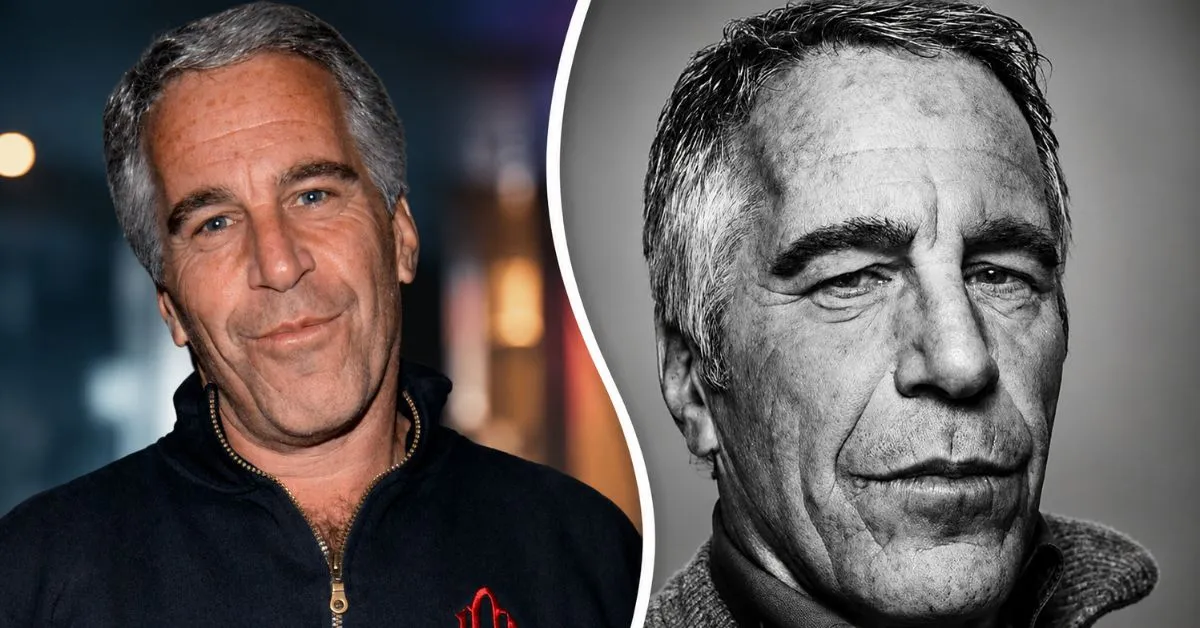
Quick answer: Jeffrey Epstein was a wealthy American financier convicted of sex crimes who ran a network that allegedly trafficked and sexually abused dozens of underage girls. He died in federal custody in August 2019 while awaiting trial on federal sex trafficking charges. His death was ruled a suicide, but unanswered questions about his associates and possible co-conspirators remain a subject of intense public and legal scrutiny.
Quick Facts
| Full Name | Jeffrey Edward Epstein |
| Date of Birth | January 20, 1953 |
| Birthplace | Brooklyn, New York, USA |
| Nationality | American |
| Occupation | Financier, money manager |
| Known For | Federal sex trafficking charges; network of powerful associates; controversial death in custody |
| Date of Death | August 10, 2019 |
| Current Status | Deceased (ruled suicide by hanging) |
Few stories in recent American history have generated more outrage, confusion, or lingering suspicion than the Jeffrey Epstein case. A man who built a life around secrecy—his clients, his income sources, and his social circles all shrouded in deliberate ambiguity—Epstein spent decades cultivating relationships with some of the world’s most powerful people while allegedly running a systematic operation to sexually exploit underage girls.
His 2019 arrest on federal sex trafficking charges seemed to promise answers. Instead, his death in a Manhattan jail cell six weeks later deepened the mystery. Courts have since convicted his closest collaborator, Ghislaine Maxwell, and civil litigation has revealed further details about his network. But central questions—about who knew what, who was complicit, and how Epstein avoided serious consequences for so long—remain stubbornly unresolved.
This is what we know, what the courts have established, and what investigators are still working to untangle.
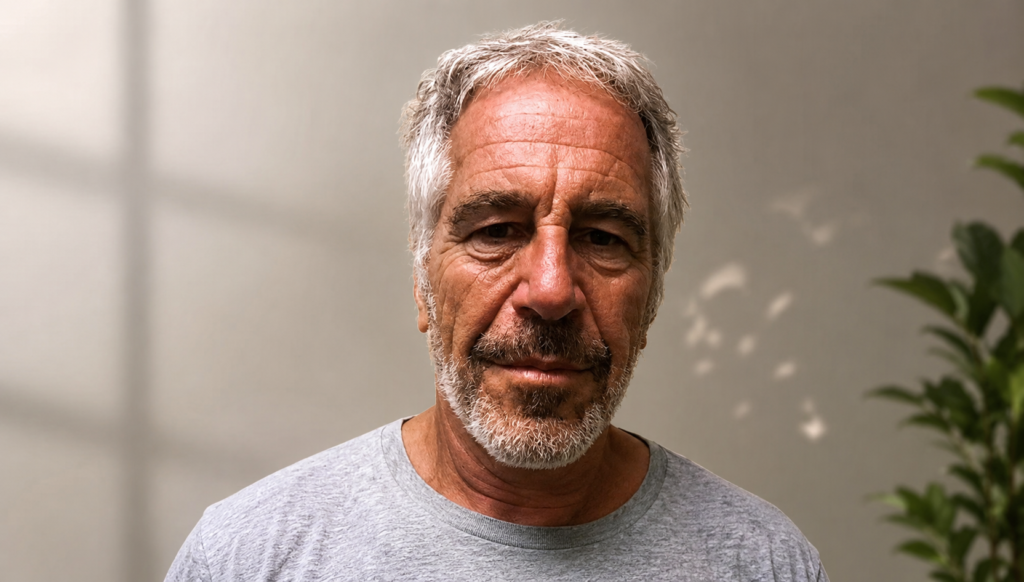
Federal Bureau of Investigation (FBI) / Public Domain
Background: Who Was Jeffrey Epstein?
Jeffrey Edward Epstein was born on January 20, 1953, in Brooklyn, New York, to a middle-class family. A precocious student, he attended Lafayette High School and later studied mathematics at Cooper Union before enrolling at New York University’s Courant Institute of Mathematical Sciences. He never completed his degree.
In the early 1970s, Epstein taught mathematics and physics at the Dalton School, an elite Manhattan private school, where he made connections that would prove career-defining. One parent he befriended was Bear Stearns executive Alan “Ace” Greenberg, who hired Epstein as a junior assistant in 1976. Despite having no formal finance credentials, Epstein rose quickly and became a limited partner at the firm by 1980.
He left Bear Stearns in 1981 under circumstances that were never fully disclosed and founded his own financial consulting firm, J. Epstein & Company. The precise nature of his business remained deliberately opaque throughout his life. He claimed to manage money exclusively for clients with assets of over $1 billion—an assertion that was never independently verified.
By the 1990s, Epstein had amassed extraordinary wealth, owned a private island in the U.S. Virgin Islands (Little Saint James), a Manhattan townhouse that was among the largest private homes in New York City, a ranch in New Mexico, and a Paris apartment. He also had a private Boeing 727 aircraft, which prosecutors and victims later referred to as the “Lolita Express.”
What Happened: The Sex Trafficking Operation
According to federal prosecutors and civil court testimony, Epstein ran a systematic operation to recruit, groom, and sexually abuse underage girls beginning at least in the early 1990s and continuing into the 2000s. Victims and prosecutors described a process in which recruiters—often young women who were themselves victims—would approach vulnerable girls, sometimes as young as 14, and offer them money for “massages” at Epstein’s properties.
Once inside his homes, victims reported being coerced into sexual acts by Epstein. Court documents and victim testimony describe abuse occurring at his Palm Beach, Florida estate, his Manhattan townhouse, his New Mexico ranch, and on his private island.
The scale of the operation, as described in subsequent legal proceedings, was extensive. A list of names found in Epstein’s properties and documents, including what became known as his “black book,” contained hundreds of contact names—though the presence of a name in such a document does not constitute evidence of wrongdoing.
Federal prosecutors in the Southern District of New York alleged in 2019 that Epstein had sexually abused “dozens of minor girls” over a period of years. It is important to note that many specific allegations involving named third parties remain unproven in court.
Investigation & Legal Timeline: A Chronological Account
2005: A 14-year-old girl’s family contacts the Palm Beach Police Department, reporting that Epstein had paid her for a sexual massage. The Palm Beach Police Department launches an investigation and identifies approximately 36 potential victims.
2006: The FBI joins the investigation, expanding its scope to include potential federal charges. Prosecutors gather evidence including phone records and testimony from multiple victims.
2007–2008: Epstein’s legal team, which included prominent attorneys Alan Dershowitz and Ken Starr, engages in extensive negotiations with federal prosecutors. In September 2007, federal prosecutors draft a 53-page indictment charging Epstein with multiple counts of sex trafficking.
June 2008: Rather than face federal charges, Epstein enters a non-prosecution agreement (NPA) with the U.S. Attorney’s Office for the Southern District of Florida, led at the time by Alexander Acosta. Under the terms of the deal—later widely criticized as a “sweetheart deal”—Epstein pleads guilty to two state charges: solicitation of prostitution and solicitation of a minor. He is sentenced to 18 months in a county jail, is granted work release privileges six days a week, and registers as a sex offender. Victims are not notified of the agreement, a fact later found by a federal judge to have violated the Crime Victims’ Rights Act.
2009–2018: Epstein serves his sentence, is released, and largely resumes his previous life. Civil lawsuits brought by victims continue during this period. In 2011, the Miami Herald’s Julie K. Brown begins investigating the case.
November 2018: The Miami Herald publishes “Perversion of Justice,” a landmark investigative series by Julie K. Brown detailing Epstein’s crimes and the 2008 plea deal. The reporting triggers renewed public and legal scrutiny.
January 2019: A federal judge rules that the NPA violated the Crime Victims’ Rights Act by failing to notify victims. The ruling does not immediately invalidate the agreement but increases legal pressure on federal prosecutors.
July 6, 2019: Federal agents arrest Epstein at Teterboro Airport in New Jersey as he returns from France. The U.S. Attorney’s Office for the Southern District of New York unseals an indictment charging Epstein with one count of sex trafficking of minors and one count of sex trafficking conspiracy, with alleged crimes dating from 2002 to 2005.
July 8, 2019: At his bail hearing, prosecutors describe Epstein as a serious flight risk. A federal judge denies bail.
July 23, 2019: Epstein is found semi-conscious in his cell at the Metropolitan Correctional Center in Manhattan with marks on his neck. Jail authorities treat the incident as a possible suicide attempt or assault. His cellmate, former police officer Nicholas Tartaglione, denies involvement.
August 10, 2019: Jeffrey Epstein is found unresponsive in his cell at the Metropolitan Correctional Center. He is pronounced dead at a Manhattan hospital. The New York City Medical Examiner’s Office subsequently rules his death a suicide by hanging.
Official Findings: What Authorities Concluded
The official position of the New York City Medical Examiner is that Jeffrey Epstein died by suicide through hanging on August 10, 2019. This conclusion has been disputed by Epstein’s legal representatives and members of his family, who retained forensic pathologist Dr. Michael Baden to conduct an independent review.
Dr. Baden publicly stated that the injuries observed—including fractures to multiple neck bones—were, in his opinion, more consistent with homicidal strangulation than suicide by hanging. The Medical Examiner’s office responded by standing firmly behind its ruling.
The Bureau of Prisons acknowledged multiple failures in Epstein’s supervision on the night of his death. Two guards assigned to check on Epstein had falsified records indicating they had made required checks when, according to the Justice Department, they had not. Both guards were charged with falsifying prison records in 2021. In November 2021, the Justice Department’s inspector general released a report describing “a cascade of failures” at the Metropolitan Correctional Center.
No official investigation has substantiated theories of murder. Claims that Epstein was killed to prevent him from naming co-conspirators, while widely discussed in public debate, remain unproven and are not supported by court-established evidence.
Key Associates and Public Figures Named in the Case
The Epstein case became notable, in part, because of the breadth of prominent individuals connected to him—connections that ranged from social acquaintances to, in some cases, alleged complicity in abuse.
Ghislaine Maxwell, Epstein’s former girlfriend and closest associate, was the most consequential figure in legal proceedings following his death. In December 2021, Maxwell was convicted by a federal jury in New York on five counts, including sex trafficking of minors and conspiracy. She was sentenced to 20 years in federal prison in June 2022. Prosecutors established that Maxwell played a central role in recruiting and grooming victims for Epstein.
Prince Andrew, the Duke of York and son of the late Queen Elizabeth II, was named in civil lawsuit filings by accuser Virginia Giuffre, who alleged he sexually abused her when she was 17 years old. Prince Andrew has consistently denied any sexual contact with Giuffre. In February 2022, he reached a civil settlement with Giuffre, the terms of which were not fully disclosed. The settlement did not constitute an admission of wrongdoing. Buckingham Palace announced that Prince Andrew would relinquish his military titles and royal patronages.
Bill Clinton, former U.S. President, was a social acquaintance of Epstein and flew on his private aircraft on multiple occasions, according to flight logs. A spokesperson for Clinton has stated that he “knows nothing about the terrible crimes Jeffrey Epstein pleaded guilty to in Florida some years ago.” No legal proceedings have implicated Clinton in any crime related to Epstein.
Donald Trump, the 45th and 47th U.S. President, was photographed with Epstein on social occasions in the 1990s and has been quoted in a 2002 New York Magazine profile saying Epstein was a “terrific guy.” Trump has stated that he banned Epstein from Mar-a-Lago after Epstein allegedly made advances toward a young woman there, and that the two had a falling out. No legal proceedings have implicated Trump in any crime related to Epstein.
Alan Dershowitz, the prominent Harvard Law professor and attorney who was part of Epstein’s legal defense team, was named in filings by Giuffre, who alleged abuse. Dershowitz has denied all allegations in strong terms and pursued defamation litigation in response. These allegations against Dershowitz have not been proven in court.
The release of court documents related to civil litigation in 2024 named additional individuals. The presence of a name in those documents reflects allegations or prior contact—not established guilt—and must be read within that legal context.
Public Response: Outrage, Questions, and a #MeToo Reckoning
The Epstein case landed at the intersection of several defining cultural and political conversations of the late 2010s: the #MeToo movement’s examination of how powerful men evade accountability, growing public skepticism toward elite institutions, and persistent questions about the fairness of the American justice system.
Victim advocates and journalists—particularly Julie K. Brown of the Miami Herald, whose reporting was instrumental in reopening the case—were widely praised for their persistence in pursuing a story that had largely been set aside after the 2008 plea deal. Brown’s reporting earned numerous awards and was adapted into the Netflix documentary series Filthy Rich (2020).
The 2008 non-prosecution agreement became a focal point of public outrage. Alexander Acosta, who had overseen the deal as U.S. Attorney and later became Secretary of Labor under President Trump, resigned from his cabinet position in July 2019 following the renewed scrutiny. Acosta has stated that he believed the deal was “the right thing” given the evidence at the time—a characterization victims and their advocates have rejected forcefully.
For the many women who came forward as victims, the public attention was both validating and painful. Organizations supporting sexual assault survivors noted that the case highlighted systemic failures—including the way wealth and social connection can distort prosecutorial decision-making—that affect survivors well beyond any single case.
Legacy and Ongoing Questions: What Remains Unresolved
Ghislaine Maxwell’s conviction confirmed what federal prosecutors had alleged: that Epstein did not act alone. Maxwell was, in the words of the judge who sentenced her, “a sophisticated predator.” But the question of who else, if anyone, was aware of or complicit in the abuse—and whether anyone beyond Maxwell will face charges—remains open.
In 2024, Judge Loretta Preska ordered the release of additional documents from civil litigation brought by Virginia Giuffre against Ghislaine Maxwell. The documents included deposition transcripts and communications that named further individuals. Legal experts noted that the documents were produced in civil litigation and that the allegations they contained had not been tested in criminal proceedings.
The U.S. Virgin Islands also pursued legal action against Epstein’s estate, alleging that Epstein used Little Saint James island as a base for trafficking. That case reached a settlement in 2024, with the estate agreeing to pay $105 million, according to court records.
Victims and advocates continue to call for a full accounting. “We deserve to know who enabled this,” Virginia Giuffre said in a statement following Maxwell’s sentencing. Many of Epstein’s survivors have pursued and in some cases won civil settlements against his estate, which was reported to be valued at approximately $577 million at the time of his death.
The Justice Department’s investigation into potential co-conspirators has not, as of the time of publication, resulted in additional criminal charges beyond Maxwell’s conviction.
Final Thought: A Case That Changed How America Sees Power
The Epstein case is not simply a story about one man’s crimes. It is a story about institutional failure—about how wealth, social access, and legal leverage can be used to delay accountability for years. It exposed fault lines in prosecutorial discretion, raised hard questions about whose testimony gets believed, and forced a reckoning with how elite networks function.
Jeffrey Epstein died without facing trial on his 2019 federal charges. But the legal, cultural, and political reverberations of his case continue. Ghislaine Maxwell is serving a 20-year prison sentence. Civil courts have compelled the release of documents that continue to be analyzed by journalists and legal observers. And the survivors who came forward—at great personal cost—have ensured that this story cannot simply be filed away.
For those seeking deeper understanding, court documents from the SDNY prosecution, the Maxwell trial record, and the Miami Herald’s “Perversion of Justice” series remain primary sources of verified information.
Frequently Asked Questions
What crimes was Jeffrey Epstein convicted of?
In 2008, Epstein pleaded guilty to two state charges in Florida: solicitation of prostitution and procurement of minors for prostitution. He was sentenced to 18 months in a county jail with work release privileges and required to register as a sex offender. He was arrested in 2019 on federal sex trafficking charges but died before a trial could take place.
How did Jeffrey Epstein die?
Epstein was found unresponsive in his cell at the Metropolitan Correctional Center in Manhattan on August 10, 2019. The New York City Medical Examiner ruled his death a suicide by hanging. Independent forensic pathologist Dr. Michael Baden, hired by Epstein’s family, disputed that conclusion, stating the injuries were more consistent with strangulation. No official investigation has established that Epstein was killed.
Who was Ghislaine Maxwell and what happened to her?
Ghislaine Maxwell was Epstein’s former girlfriend and longtime associate. In December 2021, a federal jury convicted her on five counts, including sex trafficking of minors. She was sentenced to 20 years in federal prison in June 2022. Prosecutors described her as a central participant in recruiting and grooming victims for Epstein.
What was the “sweetheart deal” from 2008?
The 2008 non-prosecution agreement was a deal negotiated between Epstein’s attorneys and the U.S. Attorney’s Office for the Southern District of Florida, then led by Alexander Acosta. Under its terms, Epstein avoided federal prosecution in exchange for pleading guilty to lesser state charges. A federal judge later ruled that the deal violated the Crime Victims’ Rights Act because victims were not informed of its terms. Acosta resigned as Secretary of Labor in 2019 amid renewed scrutiny of the agreement.
Were other people charged in connection with Epstein’s crimes?
Beyond Ghislaine Maxwell, no additional individuals have been convicted on criminal charges directly related to Epstein’s trafficking operation as of the time of publication. The U.S. Virgin Islands reached a $105 million civil settlement with Epstein’s estate in 2024. Several individuals named in civil litigation filings have denied wrongdoing, and those allegations have not been proven in criminal court.
Are the documents released in 2024 evidence of criminal wrongdoing by named individuals?
No. The documents released in 2024 were produced in the context of civil litigation between Virginia Giuffre and Ghislaine Maxwell. They contain allegations, deposition testimony, and communications—but the presence of a person’s name in those documents is not proof of criminal conduct. Criminal guilt must be established through prosecution and conviction in a court of law.

Sophia Carter is an entertainment journalist and celebrity culture writer with a passion for covering Hollywood news, celebrity biographies, lifestyle trends, and pop culture stories. She specializes in researching public figures, industry developments, and trending entertainment topics to create engaging, accurate, and reader-friendly content. Through her work, Sophia aims to provide readers with well-researched insights and timely updates from the world of entertainment.