
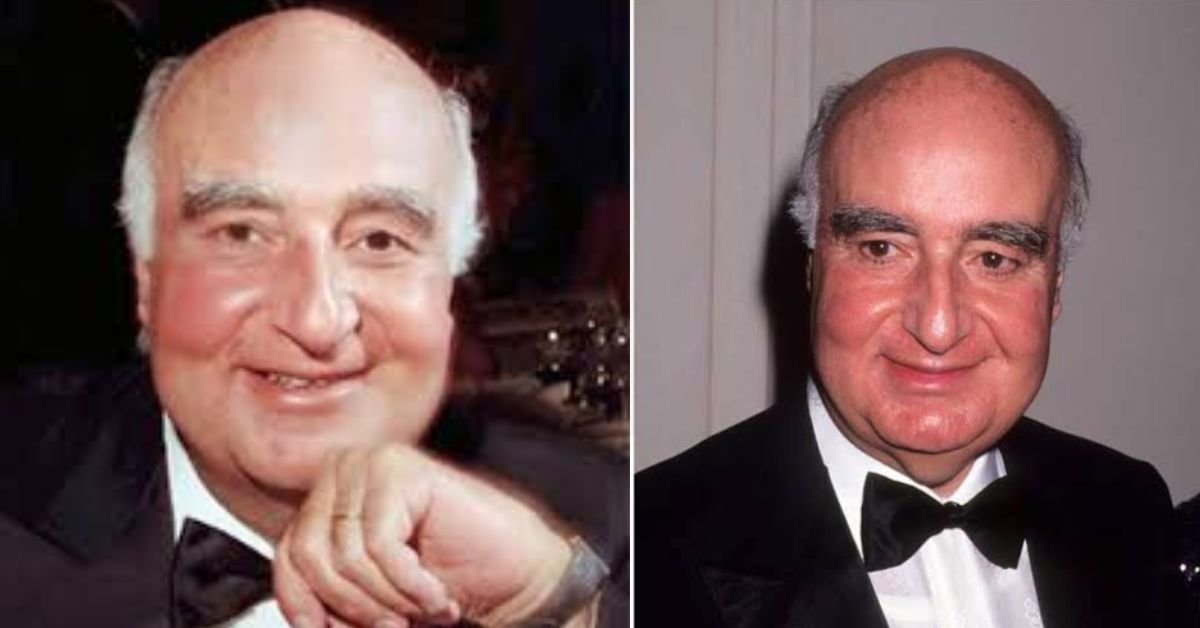
Quick Answer: Edmond Safra (1932–1999) was a Lebanese-born billionaire banker who founded Republic New York Corporation and Safra Group. He died on December 3, 1999, in Monaco, when a fire broke out in his penthouse apartment. His nurse, Ted Maher, was convicted of starting the fire. Safra’s estimated net worth at the time of his death was approximately $2.5 billion.
Quick Facts
| Detail | Information |
|---|---|
| Full Name | Edmond Jacob Safra |
| Date of Birth | August 6, 1932 |
| Place of Birth | Beirut, Lebanon |
| Nationality | Lebanese-Brazilian |
| Date of Death | December 3, 1999 |
| Place of Death | Monaco |
| Cause of Death | Smoke inhalation from apartment fire |
| Age at Death | 67 |
| Spouse | Lily Safra (m. 1976) |
| Estimated Net Worth | ~$2.5 billion (at time of death) |
| Known For | Founder of Republic New York Corporation, Trade Development Bank, and Safra Group |
Edmond Safra was a Lebanese-born billionaire who built one of the world’s most prestigious private banking empires. He died on December 3, 1999, in Monaco, after his nurse intentionally set fire to his penthouse in a bid to appear heroic. Safra was 67. His estate was valued at approximately $2.5 billion, and his wife, Lily Safra, became one of the world’s most prominent philanthropists.
Edmond Safra did not inherit a banking dynasty. He built one. Starting in Beirut in the early 1950s, Safra transformed a modest family money-changing business into a global private banking network that served high-net-worth clients across five continents. By the time of his death, he controlled Republic New York Corporation — then one of the largest banks in the United States by assets — and the Geneva-based Trade Development Bank.
His death was not the quiet passing of an aging financier. It was a crime. On the night of December 3, 1999, a fire broke out in his fortified penthouse apartment in Monaco. Safra, who had been in poor health due to a progressive neurological condition, could not escape. He died of smoke inhalation. His American nurse, Ted Maher, was later convicted of setting the fire deliberately.
The circumstances surrounding Safra’s death — the high-security apartment, the deception, the cover story — drew international media attention and raised serious questions about personal security practices among the ultra-wealthy. This article documents Safra’s life chronologically: his origins, his banking career, his family, his net worth, and the verified facts of his death and its legal aftermath.
Early Life: Beirut to São Paulo
Edmond Jacob Safra was born on August 6, 1932, in Beirut, Lebanon, into a Sephardic Jewish family of Syrian origin. His father, Jacob Safra, operated a small money-changing and gold-trading business in the city. The family had deep roots in the Levantine trading community, and financial acumen was embedded in the household from an early age.
Safra began working in the family business as a teenager. By his early twenties, he had already demonstrated an instinct for client relationships and currency management that extended well beyond the family storefront. In the early 1950s, he relocated to Brazil, settling in São Paulo, where a large Sephardic diaspora community had established itself. There, he founded Banco Safra in 1955. The institution grew steadily and remains one of Brazil’s largest privately held banks today, operated by the Safra family.
Safra’s time in Brazil shaped his understanding of emerging-market clients and cross-border wealth management — two pillars that would define his later career in Europe and the United States.
Building a Banking Empire: Republic New York and Trade Development Bank
Safra’s ambitions extended beyond São Paulo. In 1956, he moved to Geneva and established the Trade Development Bank (TDB), which catered specifically to private clients seeking discretion, stability, and international reach. TDB attracted wealthy depositors from the Middle East, Latin America, and Europe. Its reputation for conservative management and confidentiality made it a preferred institution for clients who valued security over yield.
In 1966, Safra brought his model to New York. He founded the Republic National Bank of New York, which later became Republic New York Corporation. The bank grew significantly through the 1970s and 1980s, focusing on retail and private banking, trade finance, and precious metals trading. By the 1990s, Republic New York Corporation held assets exceeding $60 billion, according to contemporaneous financial reporting.
In 1999 — the same year Safra died — he completed negotiations to sell Republic New York Corporation and Safra Republic Holdings to HSBC for approximately $10.3 billion. The deal closed after his death, in the year 2000, and was one of the largest banking acquisitions of its era.
Safra also sold the Trade Development Bank to American Express in 1983 for approximately $550 million. That transaction generated significant controversy: American Express later became the subject of allegations that it had orchestrated a smear campaign against Safra, spreading false rumors about his alleged links to drug money laundering. American Express ultimately acknowledged the campaign, issued a formal public apology to Safra in 1989, and donated $8 million to charities of his choosing, according to reporting by The New York Times.
The American Express Scandal: A Smear Campaign and Its Aftermath
The episode with American Express is one of the most documented controversies of Safra’s career. After the 1983 sale of TDB, Safra signed a non-compete agreement but eventually sought to return to private banking by founding a new institution. American Express, viewing this as competitive, allegedly hired private investigators and public relations operatives to plant false stories linking Safra to money laundering and organized crime.
The allegations were fabricated. When the operation was exposed — largely through investigative reporting and legal proceedings — American Express CEO James Robinson III issued a personal apology. The $8 million settlement went to charities nominated by Safra. The incident reinforced Safra’s reputation as a target for institutional actors, a detail that would gain retrospective significance given the circumstances of his death.
Edmond Safra’s Family
Safra married Lily Watkins in 1976. Lily Safra — born Claudine Renate Hecklinger in Germany and later known by other names through prior marriages — was a well-known figure in international social circles before she married Edmond. The couple had no children together, and Edmond had no children from any previous relationship.
Edmond’s brothers, including Joseph Safra and Moise Safra, continued the family banking operations. Joseph Safra in particular expanded Banco Safra significantly in Brazil. The Safra family, collectively, remains one of the wealthiest banking dynasties in the world.
Following Edmond’s death, Lily Safra became the primary beneficiary of his estate. She subsequently became a significant philanthropist, donating to institutions including the Edmond J. Safra Foundation, which had been established by Edmond to support Jewish community projects, medical research, and education. The foundation continues to operate under her stewardship.
Edmond Safra’s Net Worth
At the time of his death in December 1999, Edmond Safra’s net worth was estimated at approximately $2.5 billion, according to contemporaneous reporting by Forbes and The New York Times. The sale of Republic New York Corporation to HSBC, which closed in early 2000 after his death, valued the transaction at approximately $10.3 billion. Safra’s personal stake represented a substantial share of that figure.
The combined value of his holdings in Banco Safra, Safra Republic Holdings, and various real estate and investment assets made him one of the wealthiest individuals in the world at the time of his death.
Health Decline in His Final Years
Edmond Safra had been diagnosed with progressive supranuclear palsy (PSP) — a rare degenerative neurological disorder that affects movement, balance, and cognitive function. PSP has no cure and progressively limits a patient’s mobility and independence.
By the late 1990s, Safra required round-the-clock nursing care. He maintained a team of nurses and security staff at his primary Monaco residence, Villa Leopolda, and at his penthouse apartment in the Belle Époque building in Monte Carlo. His security arrangements were extensive and reflected both the nature of his wealth and the perceived threats from prior incidents, including the American Express affair.
Cause of Death: The Monaco Fire of 1999
What happened on December 3, 1999?
On the night of December 3, 1999, a fire broke out in Edmond Safra’s fortified penthouse apartment in the Belle Époque building in Monte Carlo, Monaco. Safra and a nurse, Vivian Torrente, sought shelter in a bathroom, attempting to wait out the fire. They remained there while emergency services responded.
Safra died of smoke inhalation before he could be rescued. Torrente survived.
Who was Ted Maher, and what did he do?
Ted Maher was an American nurse employed by Safra’s household staff. On the night of the fire, Maher initially presented himself as a victim — he had self-inflicted stab wounds and claimed he had fought off attackers who had threatened Safra’s life.
Investigators quickly determined the attack story was fabricated. Maher had started the fire himself. According to court records and reporting by The Guardian and The New York Times, Maher later admitted that he had set a small fire in a wastebasket, believing he would be able to extinguish it quickly and emerge as a hero — rescuing Safra and cementing his value as a trusted caregiver.
The fire spread beyond his control.
What was the legal outcome?
Monegasque authorities arrested Maher in 2000. He was tried in Monaco and convicted of arson and involuntary manslaughter in 2002. He was sentenced to ten years in prison. Maher appealed the conviction; a subsequent appeal in 2004 resulted in a reduced sentence of seven years and three months, with time served taken into account. He was released and returned to the United States.
No evidence emerged at trial linking Maher to any external conspiracy, organized crime, or other parties. The Monegasque court treated the incident as the result of Maher’s individual and reckless decision-making.
Edmond Safra’s Philanthropic Legacy
Before his death, Safra had already established the Edmond J. Safra Foundation as a vehicle for philanthropic giving. The foundation’s priorities included Jewish community institutions, university research programs, and medical facilities. Among its notable contributions was significant funding to Yeshiva University in New York and support for Hebrew University of Jerusalem.
The foundation’s profile grew substantially after Safra’s death, under Lily Safra’s direction. She donated to institutions including Cambridge University, the Weizmann Institute of Science, and NYU Medical Center. In 2010, the Edmond J. Safra Center for Ethics at Harvard University was renamed and expanded with a major donation from the foundation.
Safra’s philanthropic approach during his lifetime emphasized institutional capacity-building over personal visibility. He rarely gave public interviews and avoided the media profile common among billionaires of comparable wealth.
The Edmond Safra Timeline
| Year | Event |
|---|---|
| 1932 | Born in Beirut, Lebanon |
| 1955 | Founded Banco Safra in São Paulo, Brazil |
| 1956 | Established Trade Development Bank in Geneva |
| 1966 | Founded Republic National Bank of New York |
| 1976 | Married Lily Watkins in Monaco |
| 1983 | Sold Trade Development Bank to American Express for ~$550 million |
| 1989 | American Express issued formal apology for smear campaign; donated $8M to Safra’s charities |
| Late 1990s | Diagnosed with progressive supranuclear palsy |
| 1999 | Agreed to sell Republic New York Corporation to HSBC for ~$10.3 billion |
| Dec. 3, 1999 | Died of smoke inhalation following apartment fire in Monaco |
| 2000 | HSBC acquisition closed; Ted Maher arrested |
| 2002 | Maher convicted of arson and involuntary manslaughter; sentenced to 10 years |
| 2004 | Maher’s sentence reduced to 7 years, 3 months on appeal |
What Edmond Safra’s Life Actually Tells Us
Edmond Safra’s biography does not reduce neatly to a single narrative. He was a banking builder who started with a currency-exchange counter in Beirut and ended with a $10 billion acquisition by one of the world’s largest financial institutions. He was also a target — of a corporate smear operation he eventually won, and of a reckless crime committed by someone he employed to keep him safe.
His death at 67 cut short a life defined by private accumulation and controlled public exposure. The verified record shows a man who constructed lasting institutions, maintained an intense focus on client confidentiality, and gave substantially to causes he chose not to publicize.
Lily Safra continues his philanthropic work. Banco Safra continues to operate in Brazil under family direction. The Edmond J. Safra Foundation continues to fund research, education, and community institutions. Those are the facts on record.
Frequently Asked Questions
How did Edmond Safra die?
Edmond Safra died on December 3, 1999, from smoke inhalation after a fire broke out in his penthouse apartment in Monte Carlo, Monaco. His nurse, Ted Maher, set the fire deliberately in an attempt to appear heroic. Safra was unable to escape due to his advanced neurological condition. He was 67.
Who was responsible for the fire that killed Edmond Safra?
Ted Maher, an American nurse employed by Safra’s household, was convicted by a Monegasque court in 2002 of arson and involuntary manslaughter. Maher admitted to starting a fire in a wastebasket, intending to extinguish it quickly and rescue Safra. The fire spread beyond his control. No other parties were implicated by the court.
What was Edmond Safra’s net worth?
Edmond Safra married Lily Watkins in 1976. The couple had no children. After Safra’s death, Lily Safra became the primary beneficiary of his estate and a major philanthropist, directing significant donations through the Edmond J. Safra Foundation.
Who was Edmond Safra’s wife?
Edmond Safra married Lily Watkins in 1976. The couple had no children. After Safra’s death, Lily Safra became the primary beneficiary of his estate and a major philanthropist, directing significant donations through the Edmond J. Safra Foundation.
What banks did Edmond Safra found?
Safra founded Banco Safra in Brazil in 1955, the Trade Development Bank in Geneva in 1956, and Republic National Bank of New York in 1966. Republic National Bank later became Republic New York Corporation. He sold TDB to American Express in 1983 and Republic New York Corporation to HSBC in 1999.
What was the American Express scandal involving Edmond Safra?
After Safra sold his Trade Development Bank to American Express in 1983, American Express allegedly hired operatives to spread false allegations linking Safra to drug money laundering and organized crime. The campaign was exposed, and American Express CEO James Robinson III issued a formal public apology in 1989. American Express donated $8 million to charities selected by Safra, per reporting by The New York Times.

Sophia Carter is an entertainment journalist and celebrity culture writer with a passion for covering Hollywood news, celebrity biographies, lifestyle trends, and pop culture stories. She specializes in researching public figures, industry developments, and trending entertainment topics to create engaging, accurate, and reader-friendly content. Through her work, Sophia aims to provide readers with well-researched insights and timely updates from the world of entertainment.