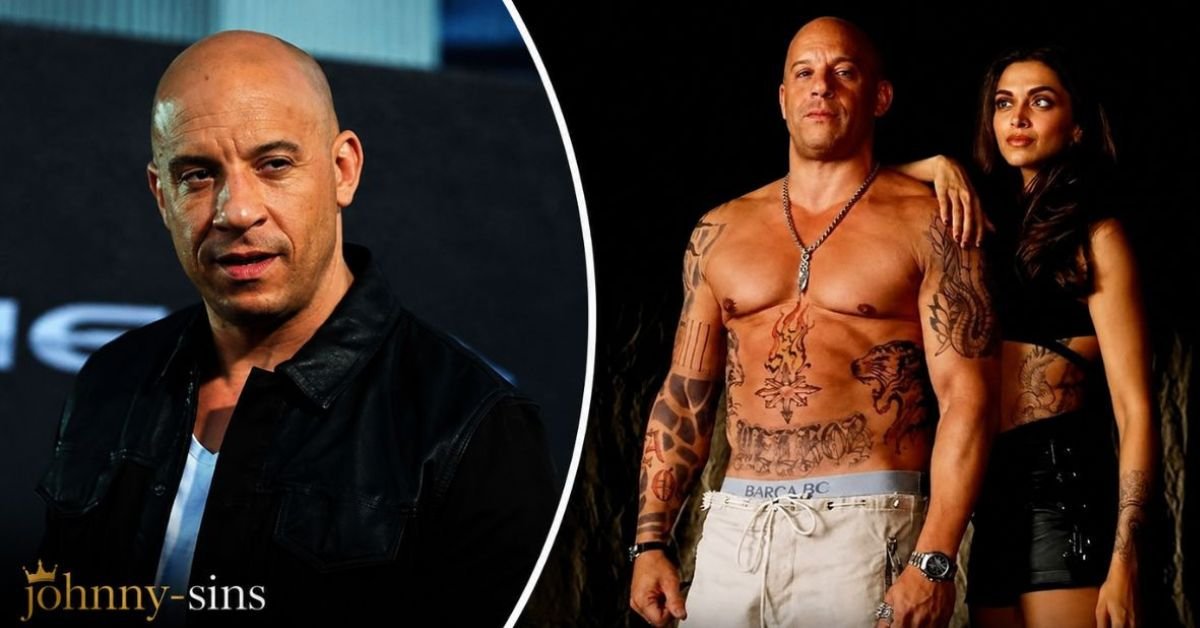
TL;DR: Vin Diesel’s net worth is estimated at $225 million as of 2026, according to Celebrity Net Worth. The figure reflects decades of box office dominance across the Fast & Furious franchise, a landmark Groot voice-acting deal with Marvel, shrewd backend equity negotiations, and ownership of the Riddick franchise — all built on a career that started with a $100,000 check and a short film at Cannes.
He was born in California, raised in Greenwich Village, and spent years being told he didn’t fit the mold. No traditional leading-man looks. No industry connections. No blueprint to follow. What Vin Diesel had instead was an almost irrational belief in his own story — and the patience to wait for Hollywood to catch up.
It did. And then some.
Few actors have engineered their own rise quite so deliberately. Diesel didn’t just stumble into the Fast & Furious franchise and ride the wave. He wrote a short film, directed it himself, took it to Cannes, caught Steven Spielberg’s eye, turned down $20 million when the terms didn’t suit him, and eventually negotiated himself into ownership of an entire sci-fi franchise — all before streaming existed and before “content creator” was a job title.
Today, Vin Diesel’s net worth stands at $225 million. But the number alone doesn’t capture the story. This is an actor who built an empire on loyalty, leverage, and an almost stubborn refusal to play by anyone else’s rules.
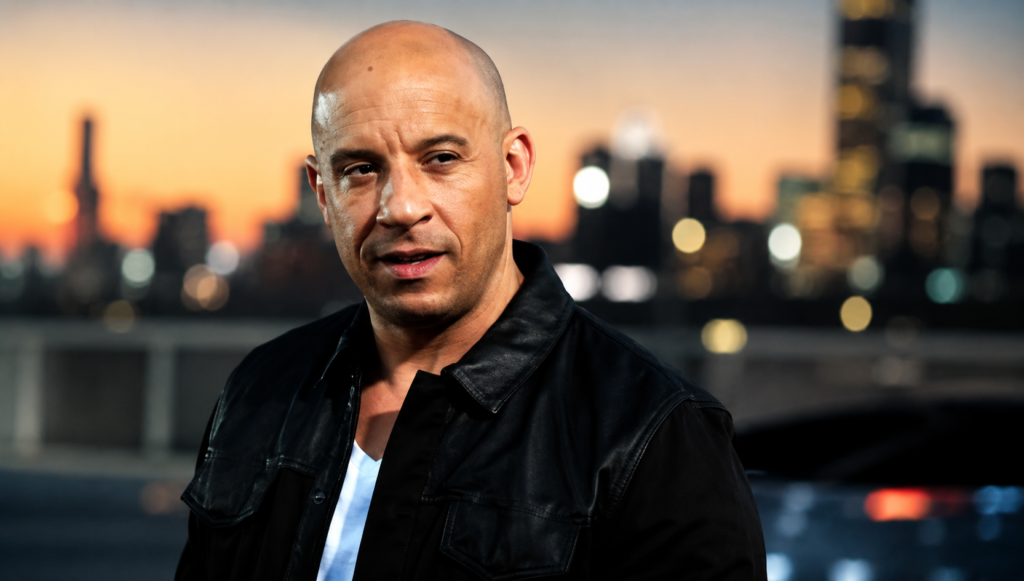
Biography Snapshot
| Full Name | Mark Sinclair Vincent |
| Known As | Vin Diesel |
| Date of Birth | July 18, 1967 |
| Age | 58 (as of 2026) |
| Birthplace | Alameda County, California; raised in New York City |
| Nationality | American |
| Profession | Actor, Film Producer, Director, Screenwriter, Voice Actor |
| Years Active | 1990–present |
| Known For | Fast & Furious franchise, Groot (MCU), Riddick franchise |
| Relationship Status | With Paloma Jiménez (since 2007) |
| Children | Hania Riley (born 2008), Vincent Sinclair (born 2010), Pauline (born 2015) |
| Education | Hunter College, New York City (English; did not complete degree) |
| Net Worth | $225 million (Celebrity Net Worth, March 2026) |
| Social Media | Instagram: @vindiesel (103M followers); Facebook: 102M+ likes |
Early Life and Background: Greenwich Village to Hollywood
Mark Sinclair Vincent grew up in the kind of New York City household that values art over affluence. Raised by his mother, Delora, and his stepfather Irving Vincent — a theater director and acting teacher — in Greenwich Village, Diesel was surrounded by performance from the beginning. He has a fraternal twin brother named Paul.
His first stage appearance came at age seven, under circumstances that could have gone very differently. Diesel and a group of friends broke into the Theater for the New City with the intention of vandalizing it. The theater’s artistic director discovered them — and instead of calling the police, offered them roles in an upcoming production called Dinosaur Door. That impulsive childhood decision set the course for everything that followed.
Diesel stayed involved with the theater throughout his teens. He later enrolled at Hunter College in New York City as an English major, developing a writer’s instinct for narrative structure that would serve him long after he dropped out and headed west.
The Breakthrough Moment: A Short Film, Cannes, and Spielberg
The conventional path to Hollywood — drama school, agent, auditions, rejection — wasn’t working. Diesel was multiracial in an industry that didn’t quite know where to place him. Too ambiguous for most roles. Not fitting the established categories.
So he made his own role.
In 1995, Diesel wrote, directed, produced, and starred in Multi-Facial, a 19-minute semi-autobiographical short film exploring the experience of a mixed-race actor navigating an industry built on rigid typecasting. The film was selected for the Cannes Film Festival — an extraordinary achievement for a self-funded independent short. It gave Diesel something no audition could: undeniable proof of voice.
He followed it with Strays in 1997, his first feature-length film, which premiered at Sundance. Neither project made him rich, but both made him visible to the right people. Steven Spielberg saw Multi-Facial, was impressed enough to personally cast Diesel in Saving Private Ryan (1998), and with that, the outsider finally had his table.
His paycheck for Saving Private Ryan? $100,000. A modest beginning — but the door was open.
Career Evolution: From Cult Roles to Global Dominance
Diesel’s transition from independent filmmaker to bona fide Hollywood star moved fast once it began. In 2000, he voiced the title character in The Iron Giant, an animated film that initially underperformed but has since become a beloved cult classic. That same year, he introduced audiences to Richard B. Riddick in Pitch Black — a sci-fi anti-hero role that would define one of his most passionate career threads.
Then came 2001 and The Fast and the Furious.
Diesel earned $2 million to play Dominic Toretto, a street racer who operates by an uncompromising code of loyalty and family. The film grossed over $200 million worldwide on a $38 million budget. A franchise was born — though Diesel initially wanted nothing to do with sequels.
He turned down a reported $20 to $25 million to star in 2 Fast 2 Furious, fearing that a rushed sequel would dilute the original. Instead, he committed to The Chronicles of Riddick in 2004, earning $11.5 million for a film that ultimately disappointed at the box office. It was a setback. And it led, indirectly, to one of the most calculated negotiations of his career.
By 2002, Diesel had also starred in xXx, earning $10 million and proving he could anchor an entirely separate action franchise. The global reach of his appeal was becoming undeniable.
Most Iconic Works and Achievements
The Fast & Furious Franchise
The Fast & Furious franchise has generated over $7.3 billion at the global box office, according to multiple industry trackers, making it one of the highest-grossing film series in cinema history. Vin Diesel’s combined filmography across all his projects has cleared $11 billion in worldwide box office receipts — a number very few actors in Hollywood history can claim.
Diesel rejoined the franchise in a brief cameo for The Fast and the Furious: Tokyo Drift (2006) before returning full-time with Fast & Furious in 2009. From that point, his salary trajectory was extraordinary:
- Fast Five (2011): $15 million (including producer fee)
- Furious 7 (2015): Approximately $47 million in combined salary and backend equity — the year Furious 7 grossed $1.5 billion worldwide
- The Fate of the Furious (2017): $54.3 million
- F9 (released 2021): $55 million across the June 2019–June 2020 earning period, including a $20 million upfront base
- Fast X (2023): $20 million flat base salary
In total, Diesel has earned at least $150 million in salary, bonuses, and royalties from the Fast & Furious franchise alone, according to Celebrity Net Worth.
Voicing Groot in the Marvel Cinematic Universe
In 2014, Diesel joined the Marvel Cinematic Universe as the voice of Groot in Guardians of the Galaxy, a sentient tree whose entire vocabulary consists of the phrase “I am Groot” delivered in varied inflections — and, where applicable, across multiple languages.
Director James Gunn has debunked claims that Diesel was paid $54 million for the role. Reliable industry estimates, however, still place his per-film earnings between $13 million and $15 million — making Diesel’s pay-per-word ratio arguably the most lucrative in film history. Groot appeared in multiple Marvel projects, including Avengers: Endgame and Guardians of the Galaxy Vol. 3.
The Riddick Deal: Hollywood’s Smartest Trade
Vin Diesel’s decision to bypass a traditional acting fee for his Tokyo Drift cameo remains one of the most strategically brilliant moves in modern entertainment history.
Here’s how it happened: Universal Pictures, struggling with poor test screenings for The Fast and the Furious: Tokyo Drift in 2006, begged Diesel to make a surprise cameo to revive audience interest. Rather than accept a cash fee, Diesel negotiated for the full cinematic and ownership rights to the Riddick franchise — a character Universal had already shelved after The Chronicles of Riddick underperformed.
Diesel agreed to appear on screen for just over one minute. In exchange, he got an entire intellectual property.
He independently financed and produced Riddick in 2013. The film grossed $100 million on a budget of approximately $38 million. DVD and streaming revenue — all of which flowed directly to Diesel through his production company, One Race Films — added further returns that remain undisclosed but substantial.
Personal Life and Public Persona
Vin Diesel has been with model Paloma Jiménez since 2007. Together, they have three children: Hania Riley (born April 2008), Vincent Sinclair (born 2010), and Pauline (born March 2015). Pauline is named after Diesel’s close friend and Fast & Furious co-star Paul Walker, who died in a car accident in November 2013. Diesel serves as godfather to Walker’s daughter, Meadow.
The persona of Dom Toretto — a man for whom family is everything — is not entirely a performance. Diesel’s Instagram posts, his interviews, and his public gestures consistently emphasize loyalty, grief, and emotional connection. When he posted a photo of himself with Walker on the seventh anniversary of Walker’s death, captioned simply “Seven years… Not a day passes… All love, Always,” it was the kind of moment that turns a celebrity into something more durable: a human being people actually root for.
Hidden Facts and Lesser-Known Insights
A few things about Vin Diesel that tend to get lost behind the franchise headlines:
- He’s a lifelong Dungeons & Dragons player. Diesel has played D&D for over three decades and wrote the foreword for 30 Years of Adventure: A Celebration of Dungeons & Dragons. He has credited the game with developing his storytelling instincts.
- His voice broke at 15. The trademark deep baritone — so distinctive that it commands $13 to $15 million per film from Marvel — arrived in his mid-teens, when he suddenly began sounding like an adult on the phone.
- He once changed a stranger’s tire on the 405 freeway. In late 2020, a woman broke down near LAX. A car pulled over. It was Vin Diesel. He changed the tire, accepted a hug and some Handi Wipes, and drove off. The story spread widely, and it tracks.
- Multi-Facial got him a Spielberg role. The 19-minute short film Diesel made for almost nothing in 1995 led directly to his appearance in one of the most important war films ever made.
- He has a fraternal twin. Paul Vincent, Vin’s brother, has largely stayed out of the spotlight — an interesting contrast to one of the most publicly visible people on the planet.
Net Worth and Business Influence
Vin Diesel’s net worth is estimated at $225 million as of 2026. The breakdown of how that wealth was built is more instructive than the headline number.
The Fast & Furious franchise accounts for the largest single contribution — at least $150 million in combined earnings. Marvel’s Groot payments, spread across multiple films, likely add another $50 to $90 million to the total. The Riddick deal and its associated revenues represent a separate, independently earned stream. And his production company, One Race Films, gives Diesel ongoing participation in the commercial performance of projects he helps develop.
What separates Diesel’s financial story from most actors at his level is the consistent prioritization of ownership and backend participation over flat upfront fees. He took less guaranteed money on multiple occasions specifically to secure equity stakes — and it paid off at scale when Furious 7 grossed $1.5 billion and The Fate of the Furious cleared $1.2 billion.
His real estate holdings include a Beverly Hills estate on a two-acre lot purchased for $2.25 million in 2001 — now estimated at $7 to $10 million — as well as a former Hollywood Hills home he rented for $5,800 per month before eventually selling. He also travels and lives on set in a custom-built, two-story mobile home built by Anderson Mobile Estates, featuring a pop-up second floor, 3D screens, and a children’s playroom. The rig cost $1.1 million to build and is now valued at over $2 million.
His car collection reflects his aesthetic: a 1969 Dodge Charger Daytona, a 1970 Plymouth Road Runner, a 1963 Chevrolet Corvette Sting Ray Grand Sport, and a 2014 Lykan Hypersport — one of just seven ever made, valued at approximately $3.4 million.
Fashion, Influence, and Cultural Impact
Vin Diesel doesn’t operate within the traditional Hollywood style ecosystem. He isn’t a fashion week fixture or a brand ambassador in the conventional sense. His cultural presence is built differently — on physical identity, franchise mythology, and a consistent commitment to the idea of family as a universal value.
His aesthetic is unmistakable: shaved head, broad frame, understated streetwear offset by tailored red carpet appearances. It’s a look that has influenced the visual language of action cinema globally, particularly in markets across Asia, Latin America, and the Middle East — regions where the Fast & Furious franchise has consistently outperformed domestic U.S. box office expectations.
Beyond aesthetics, Diesel represents something rarer: a multiracial actor who built one of Hollywood’s most profitable franchises at a time when such stories were not supposed to carry global blockbusters. His semi-autobiographical short film Multi-Facial was explicitly about that tension — and his career became, in a very real sense, the answer to the question it raised.
Social Media Presence
Vin Diesel commands one of the largest social media followings of any Hollywood actor:
- Instagram (@vindiesel): 103 million followers, 2,256+ posts — regularly used for franchise updates, personal tributes, and direct communication with fans
- Facebook (Vin Diesel): Over 102 million likes — one of the most-followed individual pages on the platform
His social media approach is personal rather than promotional. Posts are typically candid, emotional, or milestone-driven — anniversary tributes to Paul Walker, franchise announcements, birthday messages to his children. The result is an audience that feels genuinely connected rather than marketed to, which helps explain why his organic reach remains competitive with accounts half his age.
Frequently Asked Questions
What is Vin Diesel net worth?
Vin Diesel’s net worth is estimated at $225 million as of 2026, according to Celebrity Net Worth (updated March 2026). The majority of this wealth stems from his earnings in the Fast & Furious franchise, his Marvel voice work as Groot, backend equity stakes in major films, and ownership of the Riddick franchise through his production company, One Race Films.
How much did Vin Diesel earn from the Fast & Furious franchise?
Vin Diesel has earned at least $150 million from the Fast & Furious franchise through salaries, bonuses, and profit participation. His per-film paychecks rose from $2 million for the original film in 2001 to approximately $47 million (salary and backend equity combined) for Furious 7 in 2015, and $54.3 million for The Fate of the Furious in 2017.
How much did Vin Diesel get paid to voice Groot?
Reliable industry estimates place Vin Diesel’s per-film earnings for voicing Groot in the Marvel Cinematic Universe at between $13 million and $15 million per film. Director James Gunn has disputed earlier claims of a $54 million total, but Diesel’s Groot compensation across multiple MCU appearances remains among the highest voice-acting fees in film history.
What is the Riddick ownership deal and how did it affect Vin Diesel’s net worth?
In 2006, Vin Diesel agreed to make a brief cameo in The Fast and the Furious: Tokyo Drift in exchange for full cinematic ownership rights to the Riddick franchise, rather than accepting a cash fee. He then independently financed and produced Riddick in 2013, which grossed $100 million on a budget of approximately $38 million. All DVD and streaming revenue from that deal flows directly to Diesel through One Race Films, contributing meaningfully to his overall net worth.
What is Vin Diesel’s production company?
Vin Diesel founded One Race Films, the production company through which he has produced multiple Fast & Furious films and the 2013 Riddick. One Race Films has been central to Diesel’s strategy of securing creative control and financial participation — including backend equity in franchise films — rather than functioning solely as a talent-for-hire actor.
The Bigger Picture: What $225 Million Actually Means
Vin Diesel’s net worth is the sum of good deals, gutsy decisions, and a fundamental refusal to let anyone else define what kind of star he was allowed to be.
He broke into a theater at seven and got cast in a play. He self-funded a 19-minute film about not fitting in — and took it to Cannes. He turned down $20 million because the terms were wrong. He traded a one-minute cameo for an intellectual property that eventually grossed $100 million under his own ownership. Then he negotiated backend equity into some of the biggest films in box office history and watched the returns compound.
The money is real. So is the story behind it.
For fans curious about how other Fast & Furious cast members have built their own wealth, or interested in where Vin Diesel ranks among Hollywood’s highest-paid actors, there’s more to explore. The franchise’s 25-year legacy of global box office dominance tells a broader story about how action cinema changed — and who was sitting at the table when it did.

Sophia Carter is an entertainment journalist and celebrity culture writer with a passion for covering Hollywood news, celebrity biographies, lifestyle trends, and pop culture stories. She specializes in researching public figures, industry developments, and trending entertainment topics to create engaging, accurate, and reader-friendly content. Through her work, Sophia aims to provide readers with well-researched insights and timely updates from the world of entertainment.