
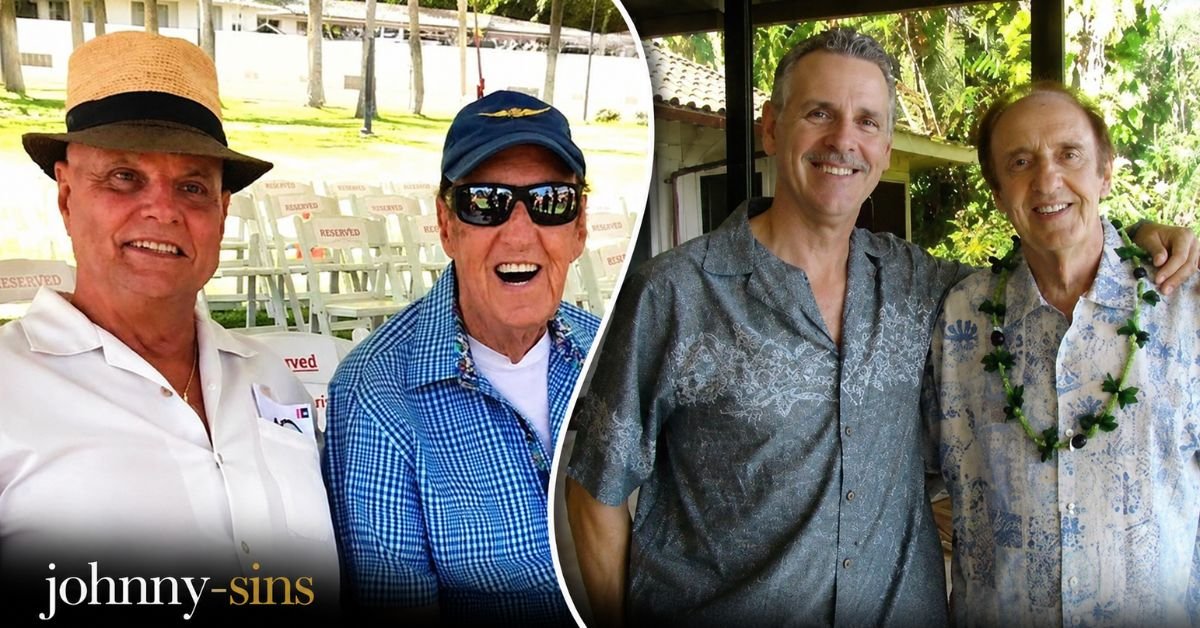
TL;DR: Stan Cadwallader is a retired American firefighter from Honolulu, Hawaii, best known as the longtime partner and husband of the late entertainer Jim Nabors. The two men met in 1975, built a decades-long private relationship, and married in January 2013 in Seattle, Washington—one of the first high-profile same-sex marriages following Washington State’s legalization of same-sex marriage in December 2012.
Some lives are defined by what people choose to keep private. Stan Cadwallader has spent most of his adult years doing exactly that—living quietly, working steadily, and building something lasting away from cameras and headlines. He wasn’t a television star. He didn’t have a record deal or a publicist. He was a firefighter from Honolulu who happened to fall in love with one of America’s most recognizable entertainers, and who spent more than four decades proving that love doesn’t need an audience to be real.
His name surfaces in searches today not because of anything he sought out, but because of what he shared with Jim Nabors—the actor and singer who gave the world Gomer Pyle, whose warm baritone became the sound of summer at the Indianapolis 500, and whose personal life remained largely his own until a quiet January morning in Seattle changed everything.
To understand Stan Cadwallader is to understand the difference between fame and significance. One he never had. The other he earned quietly, over a lifetime.
Biography Snapshot
| Field | Details |
|---|---|
| Full Name | Stan Cadwallader |
| Known As | Stan |
| Date of Birth | January 28, 1948 |
| Age | 78 (as of 2026) |
| Birthplace | Honolulu, Hawaii, USA (early life details are limited in public record) |
| Nationality | American |
| Profession | Retired Firefighter; Former Business Associate |
| Years Active | c. 1968–1990s (firefighting) |
| Known For | Decades-long partnership and marriage to Jim Nabors |
| Relationship Status | Widowed (Jim Nabors passed away November 30, 2017) |
| Children | None (publicly confirmed) |
| Education | Reported by some sources to have attended Petoskey High School, Michigan |
| Net Worth | Estimated ~$16 million (unverified; no official disclosure) |
| Social Media | No known public accounts |
Early Life and Background
The public record on Stan Cadwallader’s early years is thin—and that thinness isn’t accidental. He came from outside the entertainment industry, and he never had a reason to broadcast the details of his childhood. What’s known is that he was born on January 28, 1948, and spent his adult life rooted in Honolulu, Hawaii, where he built a career in firefighting.
Some reports suggest he may have attended Petoskey High School in Michigan before making his way to Hawaii, though primary documentation for this detail remains limited. What can be said with confidence is that Cadwallader chose a profession defined not by visibility but by service. His father, according to multiple reports, was also a firefighter—a fact that helps explain the career path Cadwallader followed from a young age.
Growing up with a father in the fire service tends to shape a person in specific ways. It instills an understanding of risk, community, and steady commitment to others. Those qualities, though rarely discussed in the context of his personal life, appear to run like a current through everything Cadwallader has done—including the relationship that would eventually bring his name into public conversation.
He joined the Honolulu fire service around the age of 20, beginning what would become a long career as a firefighter in one of America’s most distinctive cities. Hawaii’s pace of life—its physical remoteness, its tight local communities, its particular relationship with the natural world—formed the backdrop against which Cadwallader’s adult identity took shape.
The Breakthrough Moment
Stan Cadwallader’s life changed in 1975, when he met Jim Nabors in Honolulu. Nabors was already a household name by then—the warm-faced, wide-grinning actor who had turned Gomer Pyle into a cultural touchstone on The Andy Griffith Show and its spinoff, Gomer Pyle, U.S.M.C., and whose rich baritone had produced a string of successful albums throughout the 1960s and 1970s.
Nabors had developed a deep affection for Hawaii well before they met. He had been drawn to the islands’ quieter rhythms after years of television production, and by the 1970s he was spending more time there—eventually making it his primary home. Cadwallader, by contrast, was simply a local resident. A firefighter living and working in Honolulu. Not a celebrity, not a public figure, not someone circling the orbit of entertainment.
That grounding—that distinctly ordinary context—is part of what made the connection between the two men so durable. Nabors wasn’t meeting someone who wanted access to his world. He was meeting someone who already had his own.
Their relationship developed quietly. Same-sex partnerships in the late 1970s existed almost entirely outside public acknowledgment, particularly when one partner carried significant celebrity status. Cadwallader and Nabors chose to keep their relationship private—not as an act of shame, but as an act of self-preservation in a social climate that offered them no legal recognition and considerable risk.
Their first confirmed public appearance together came in 1978, when Nabors sang Back Home Again in Indiana before the start of the Indianapolis 500—a tradition he would continue for decades. Cadwallader was present. Not foregrounded, not introduced. Simply there. That quiet presence would come to define his role in Nabors’ public life for the next 35 years.
Career Evolution
Stan Cadwallader’s professional life was built entirely within the Honolulu fire service. He joined the department around 1968, following his father into a profession that demanded physical courage and sustained community commitment. By multiple accounts, he served with dedication across several decades before retiring from active firefighting.
After his retirement from the fire service, Cadwallader transitioned into a business partnership with Jim Nabors. The precise details of their business dealings are not publicly documented, but this partnership placed Cadwallader in a different kind of role—one that moved from public service to private enterprise, while still remaining largely out of public view.
What stands out about Cadwallader’s career arc is its coherence. He didn’t chase reinvention or seek the spotlight that proximity to Nabors might have offered. He moved from one form of purposeful work to another, always within the same Hawaiian context that had defined his adult life. That consistency—rare in any era, genuinely remarkable during a period of dramatic social change—says something important about who Stan Cadwallader is as a person.
Most Iconic Works and Achievements
Stan Cadwallader has no filmography, no discography, no award shelf. His most significant achievements exist in a register that doesn’t generate press releases.
The most publicly notable moment of his life came on January 15, 2013, when he and Jim Nabors were married at the Fairmont Olympic Hotel in Seattle, Washington. The ceremony was private, attended by a small group of close friends and family. Washington State had legalized same-sex marriage in December 2012, and the couple moved quickly to formalize a bond that had existed for 38 years.
That marriage mattered beyond the personal. It was the moment Jim Nabors publicly acknowledged his sexuality for the first time—and the moment Cadwallader became, briefly and involuntarily, a figure of cultural significance. Nabors told Hawaii News Now at the time: “I’m 82 and he’s in his 60s, and so we’ve been together for 38 years and I’m not ashamed of people knowing. It’s just that it was such a personal thing, I didn’t tell anybody. I’m very happy that I’ve had a partner of 38 years, and I feel very blessed.”
Their union was among the first high-profile same-sex marriages following Washington State’s marriage-equality legislation. In a different era, with different people, it might have launched a media cycle. Instead, it was handled as Cadwallader had always handled everything—with quiet dignity, and a return to private life as quickly as possible.
The second moment that placed Cadwallader in the public record came on November 30, 2017, when Jim Nabors died at his Honolulu home at the age of 87. Cadwallader was the one who confirmed the news to the Associated Press, offering a brief and deeply human statement: “Everybody knows he was a wonderful man and that’s all we can say about him. He’s going to be dearly missed.”
In that moment, he stepped into the public eye not for recognition, but to close a chapter on behalf of someone he had loved for more than four decades. Then, once again, he stepped back.
Personal Life and Public Persona
Stan Cadwallader’s personal life and public persona are, in practice, the same thing—defined almost entirely by what he has chosen not to share. He has given no recorded interviews. He has not written about his years with Nabors. He has not sought to capitalize on a relationship that, had he approached it differently, could have provided considerable profile.
What we do know comes through the edges of the public record. He and Nabors built a domestic life together in Hawaii, where Nabors owned property in both Honolulu and on Maui. After Nabors’ death, the Honolulu estate sold for $12 million—an indication of the scale of their shared life there. A 170-acre property in Hana, on the eastern coast of Maui, was also listed for $4.5 million, with Cadwallader recorded as the owner in property documents. Nabors had also owned a macadamia plantation on Maui for 25 years, which he later donated to the National Tropical Botanical Garden for conservation.
Their life together appears to have been defined less by glamour than by genuine companionship. Nabors himself described it in characteristically straightforward terms: a long partnership, a shared home, a quiet happiness. Cadwallader was the person who made that possible. He was the constant—stable, private, present—while Nabors’ public life continued its own rhythms.
Hidden Facts and Lesser-Known Insights
A few details about Stan Cadwallader’s life tend to get lost in the broad strokes of the Nabors story. They’re worth pausing on.
His father’s career shaped his own. Cadwallader followed his father into firefighting—a detail that places his choice of profession in a specific, personal context. It wasn’t just a job. It was a continuation of a family tradition built around service.
He became a business partner, not just a companion. After retiring from firefighting, Cadwallader worked as Jim Nabors’ business associate. This is rarely mentioned in coverage of their relationship, but it suggests a practical partnership that extended well beyond domestic life.
The 1978 Indianapolis 500 was an early, uncelebrated milestone. Nabors’ tradition of singing Back Home Again in Indiana at the Indy 500 is widely remembered. Less noted is that Cadwallader was present at those appearances, a quiet witness to one of American sports broadcasting’s most beloved annual rituals.
Their marriage was legally enabled by weeks. Washington State’s marriage-equality law took effect in December 2012. The couple married in January 2013—within weeks of that legal change. For two people who had been together since 1975, that timing speaks to something long held in reserve.
Jim Nabors once owned a macadamia plantation for conservation. Nabors’ connection to Hawaii was not merely residential. He stewarded large tracts of tropical land, eventually transferring his Maui macadamia plantation to the National Tropical Botanical Garden—a legacy that reflects the couple’s shared rootedness in Hawaiian land and culture.
Net Worth and Business Influence
Any precise figure attached to Stan Cadwallader’s net worth should be treated with appropriate skepticism. Some online sources cite an estimate of approximately $16 million, but this figure lacks verified sourcing and has not been confirmed through official documentation or credible financial reporting.
What can be said with more confidence is that Cadwallader’s financial position is likely influenced by multiple factors: his retirement income from a long firefighting career, his former role as Nabors’ business associate, and—most significantly—his position as the surviving spouse of an entertainer who accumulated considerable wealth through television, a successful recording career, and real estate holdings in Hawaii.
Jim Nabors recorded more than 25 albums across his career, achieving five gold records, and earned income from decades of television credits and public appearances. The Honolulu property sale of $12 million following Nabors’ death illustrates the scale of the shared estate Cadwallader inherited.
As with so much about Cadwallader’s life, the specifics remain private. That’s consistent with how he has operated throughout—keeping the details of his financial world, like everything else, largely to himself.
Fashion, Influence and Cultural Impact
Stan Cadwallader has no personal fashion profile to speak of. He’s not a style figure. He doesn’t appear on red carpets or in campaign images. His cultural impact operates at a different frequency entirely.
The influence Cadwallader carries is the kind that takes time to become visible. His relationship with Jim Nabors existed as an open secret within entertainment circles for decades—a same-sex partnership navigating American public life during a period when such relationships were legally invisible and socially precarious. That Cadwallader maintained his private life with such consistent dignity across that period is, in retrospect, its own form of quiet resistance.
Their 2013 marriage, and Nabors’ public acknowledgment of his sexuality for the first time at age 82, sent a specific signal to older generations of LGBTQ+ Americans who had spent their lives navigating the same careful privacy. It said: you can be seen, and the world will not end. The partnership they had built across four decades—while discreet—was not diminished by that discretion. It was made more visible by it.
Cadwallader himself did not seek to make a political statement. But the cultural context in which his personal life existed meant that being visible at all—appearing at Nabors’ side, being named in the marriage announcement, confirming the death to the press—carried weight beyond the personal.
Social Media Presence
Stan Cadwallader has no known, publicly verified social media accounts. He does not maintain an Instagram, a Facebook presence, or any other platform profile that can be reliably confirmed as his own.
This absence is consistent with everything else about how Cadwallader has chosen to live. For a person who spent decades building a private life alongside a public figure, the absence of a social media footprint isn’t unusual—it’s expected. There is no public digital trail, no archive of posts, no online persona to examine.
For readers hoping to find a current window into his life, there simply isn’t one. Cadwallader’s world remains, as it always has been, resolutely his own.
Frequently Asked Questions
What is Stan Cadwallader known for?
Stan Cadwallader is best known as the longtime partner and husband of Jim Nabors, the actor and singer famous for playing Gomer Pyle on The Andy Griffith Show and its spinoff Gomer Pyle, U.S.M.C. Cadwallader and Nabors met in Honolulu in 1975 and were together for 42 years. Their 2013 marriage in Seattle, Washington was among the first high-profile same-sex marriages following the state’s legalization of same-sex marriage in December 2012.
How did Stan Cadwallader and Jim Nabors meet?
Cadwallader met Jim Nabors in 1975 in Honolulu, Hawaii, where Cadwallader was working as a firefighter. Nabors had been spending increasing amounts of time in Hawaii and eventually made it his primary residence. Their meeting led to a relationship that lasted more than four decades, built on shared life in Hawaii and maintained with a consistent preference for privacy.
When and where did Stan Cadwallader and Jim Nabors get married?
Cadwallader and Nabors married on January 15, 2013, at the Fairmont Olympic Hotel in Seattle, Washington. The ceremony was private, attended by a small group of close friends and family, and was presided over by a judge. The marriage came just weeks after Washington State’s marriage-equality law took effect in December 2012. At the time of their wedding, Nabors was 82 years old and Cadwallader was 64.
Is Stan Cadwallader still alive?
As of the time of writing, there are no credible reports indicating that Stan Cadwallader has died. He has remained out of the public eye since the death of Jim Nabors on November 30, 2017, and there is limited current information about his life. He is believed to be living privately in Honolulu, Hawaii.
What happened to Stan Cadwallader after Jim Nabors died?
After Jim Nabors died on November 30, 2017, at the age of 87, Cadwallader confirmed the news to the Associated Press and then receded from public life. In the years since, he has not given interviews or made public appearances. Property records indicate that the couple’s 170-acre Maui estate was listed for sale at $4.5 million, with Cadwallader named as the owner. The Honolulu property was sold for $12 million. Cadwallader is believed to continue living privately in Hawaii.
A Life Measured in Decades, Not Headlines
Some stories don’t resolve neatly. Stan Cadwallader’s doesn’t. He isn’t a tragic figure, and he’s not an unsung hero in the conventional sense. He’s something harder to categorize: a person who lived with intention, loved with commitment, and drew a firm line between the life he wanted and the life the public might have expected from someone in his position.
His relationship with Jim Nabors lasted 42 years. His marriage lasted four. His connection to Hawaii, to firefighting, to service—these things lasted a lifetime. None of it generated a memoir or a docuseries. None of it needed to.
What Cadwallader represents, for those who find their way to his story, is a reminder that significance doesn’t require visibility. He stood beside one of America’s most beloved entertainers without ever seeking to share the glow. He grieved publicly only because the moment required it, and then he returned to the private world he had always preferred.
If you want to explore more stories like this one—people whose lives intersect with history in ways that rarely make the front page—browse our extended celebrity biography archive for profiles written with the same care and depth. You might also be interested in our coverage of Jim Nabors’ career and legacy, or our deeper look at the cultural history of same-sex marriage milestones in American entertainment.
Stan Cadwallader’s story isn’t finished. It’s just quiet. And quiet, as it turns out, can be its own kind of remarkable.

Sophia Carter is an entertainment journalist and celebrity culture writer with a passion for covering Hollywood news, celebrity biographies, lifestyle trends, and pop culture stories. She specializes in researching public figures, industry developments, and trending entertainment topics to create engaging, accurate, and reader-friendly content. Through her work, Sophia aims to provide readers with well-researched insights and timely updates from the world of entertainment.