
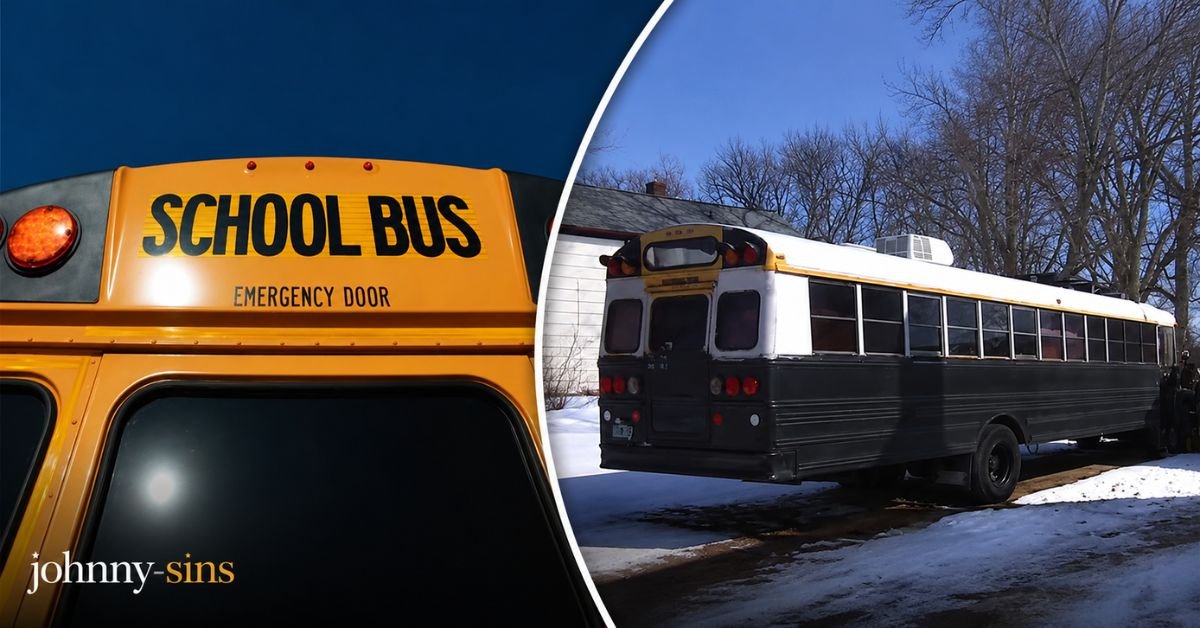
TL;DR: The Kandie Sherman PPO dispute refers to a February 2026 incident in Vassar, Michigan, where homeowner Kandie Sherman allowed her daughter’s friends to park a school bus on her property for six weeks. When the family refused to leave four months later and Sherman filed an eviction notice, the occupants obtained a Personal Protection Order (PPO) against her — effectively locking her out of her own home. The situation was resolved by March 2, 2026.
What starts as a simple act of kindness can spiral into one of the most confusing legal situations a homeowner can face. That’s exactly what happened to Kandie Sherman, a Vassar, Michigan homeowner whose story exploded across national headlines in early 2026 — and for good reason. The Kandie Sherman PPO dispute is a cautionary tale that raises serious, urgent questions about property rights, informal tenancy, and how a Personal Protection Order can be weaponized in a landlord-tenant dispute.
If you’ve ever let a friend crash at your place “just for a bit,” or allowed someone to use your land informally, this story will make you think twice. And if you’re a homeowner, landlord, or property manager trying to understand where the law draws the line, this breakdown is for you.
We’re going to walk through exactly what happened, the legal mechanics that made it possible, and — most importantly — what you can do to make sure it never happens to you.
What Is the Kandie Sherman PPO Dispute?
The Kandie Sherman PPO dispute began in October 2025, when Sherman agreed to let the family of her daughter’s friends park a converted school bus on her residential property in Vassar, Michigan. The arrangement was verbal. The agreed-upon timeframe? Six weeks. The family described themselves as self-sustainable and assured Sherman the stay would be brief.
Four months passed. The bus hadn’t moved. And when Sherman had finally had enough and served the occupants with an eviction notice, something unexpected happened: the family flipped the script and filed a Personal Protection Order (PPO) against her.
That PPO — which cited allegations of stalking against Sherman — was immediately enforceable under Michigan law. Because the bus was parked on Sherman’s own property, the order keeping her away from the bus also kept her away from her home. She had no choice but to sleep in her car.
“I’m feeling frustrated, helpless, and angry,” Sherman told CBS affiliate WNEM TV5. “I was generous enough to allow a family to park their bus on my property because they said they were self-sustainable. They were supposed to leave within six weeks, they refuse to leave.”
How Did a Generous Favor Spiral Into a Legal Nightmare?
Understanding how things escalated so quickly requires a look at the specific legal landscape in Michigan — and a few key decisions that Sherman likely didn’t anticipate would matter so much.
Here’s a step-by-step breakdown of how events unfolded:
| Timeline | Event |
|---|---|
| October 2025 | Sherman allows family to park school bus on her Vassar property for six weeks |
| ~November 2025 | Six-week deadline passes; family remains on property |
| Late 2025–Early 2026 | Family begins receiving mail at Sherman’s address; residency established |
| February 2026 | Sherman files eviction notice to remove the family |
| February 2026 | Family files a PPO against Sherman, alleging stalking |
| February 27, 2026 | WNEM TV5 reports the story; Sherman is sleeping in her car |
| March 2, 2026 | People.com covers story nationally; city of Vassar announces situation resolved |
One detail made a massive legal difference: the family had begun receiving mail at Sherman’s address. That single act — along with the length of their stay — is what transformed them from informal guests into residents with legal rights under Michigan law.
Ben Guile, Vassar’s police chief and interim city manager, explained it plainly: “Preliminary information is that they’ve established some sort of residency there by being there for a certain amount of time, receiving their mail there, things along that nature. And when somebody does that, they can gain residency rights. And that makes it more difficult to remove someone. It’s no longer ‘get off my property,’ it’s an eviction process.”
How Can Someone Establish Residency on Your Property in Michigan?
This is the part that shocks most people — and rightly so. Michigan has no formal “squatter’s rights” law in the traditional sense. According to Hemlane, squatting in Michigan is generally considered criminal trespass. However, there’s an important distinction between a squatter and someone who has been invited onto your property and has since established informal residency.
Once someone has been living at your address long enough to receive mail, register at that address, or demonstrate other markers of residency, they often acquire tenant-like legal protections. At that point, removing them requires a formal eviction process — not just a request to leave.
Key factors that can establish informal residency include:
- Receiving mail at the property address
- Extended duration of stay (particularly beyond 30 days in many jurisdictions)
- Written or verbal permission to be on the property
- Utility usage or account registration at the address
- Proof of paying for anything related to the stay, however informal
In Sherman’s case, the family checked more than one of these boxes — and that gave them enough legal footing to turn a trespassing situation into an eviction proceeding.
What Is a Personal Protection Order in Michigan, and How Can Guests Use One Against You?
A Michigan Personal Protection Order (PPO) is a civil court order designed to protect individuals from harassment, stalking, or threatening behavior. Under Michigan law (MCL 600.2950a), a PPO is effective and immediately enforceable statewide upon being signed by a judge — and crucially, it can be obtained ex parte, meaning without the other party being present in court.
In the Sherman case, the bus occupants obtained the PPO by alleging that Sherman had been stalking them. Whether or not those allegations were substantiated is a separate legal matter — what matters is that the PPO was issued, and once it was, Sherman was legally prohibited from approaching the bus.
Because the bus sat on her own property, that prohibition effectively barred her from her home.
This is an increasingly recognized risk in property disputes. A PPO is not inherently a landlord-tenant tool, but in situations involving extended stays on private property, it can be weaponized by an occupant to delay the eviction process and complicate the homeowner’s legal standing.
What City Violations Complicated the Situation Further?
Beyond the PPO and residency dispute, the Sherman case involved a third layer of complexity: the bus itself was violating two city ordinances.
According to Police Chief Ben Guile, the occupants were in breach of:
- Parking a commercial vehicle in a residential zone
- Occupying and living in a commercial vehicle
However, even those violations didn’t translate into an immediate solution. The bus reportedly had mechanical issues and couldn’t be moved. City officials were left trying to negotiate a removal timeline rather than simply issuing a citation and towing the vehicle.
This illustrates how multiple overlapping legal frameworks — property law, tenant law, city ordinances, and civil protection orders — can create a situation where no single authority has a clean, quick remedy.
Verbal vs. Written Agreements: Why It Matters for Homeowners
One of the clearest lessons from the Kandie Sherman PPO dispute is the danger of relying on verbal agreements for property access. Here’s how verbal and written agreements compare when things go wrong:
| Factor | Verbal Agreement | Written Agreement |
|---|---|---|
| Enforceability | Difficult to prove | Legally binding and documentable |
| Duration of stay | Ambiguous | Clearly defined start and end date |
| Terms of exit | Disputed | Explicit conditions for removal |
| Protection in court | Weak | Strong — courts can reference document |
| Risk of residency claims | High | Lower — terms limit residency ambiguity |
| Ability to pursue eviction | Complex | Cleaner legal pathway |
| Recommended for stays over 2 weeks? | No | Yes, always |
Had Sherman used a written agreement with a specific departure date, the legal situation may have been dramatically different. Written documentation doesn’t guarantee a clean outcome, but it provides clear evidence of terms — which is exactly what courts and law enforcement need.
What Rights Do Homeowners Have When Informal Guests Won’t Leave?
The answer to this question depends heavily on how much residency the guest has established, and which state you’re in. In Michigan — and in most U.S. states — once someone has established residency, the homeowner’s options narrow considerably. You generally cannot:
- Physically remove the person without risking assault charges
- Change the locks while the person still has possessions inside (this may constitute illegal lockout)
- Cut off utilities to force them out
- Threaten or harass them into leaving (which could expose you to a PPO, as in Sherman’s case)
What you can do:
- File a formal eviction (unlawful detainer action) through the courts
- Work with local authorities to enforce city or county ordinances they may be violating
- Negotiate a voluntary departure, ideally with legal counsel involved
- Document everything — written communications, dates, photos, and any agreements
Chief Guile’s advice in the Sherman case was simple: “Let’s all be adults. Let’s come up with a plan to satisfy everybody.”
How Was the Kandie Sherman PPO Dispute Finally Resolved?
On March 2, 2026 — the same day People.com published its national coverage of the story — the City of Vassar released a statement confirming that the situation had been resolved. The precise terms of the resolution were not made public, but city officials indicated the impasse had come to an end.
Sherman had told WNEM that getting the bus removed “would feel so wonderful.” Whether that resolution came through a negotiated departure, a court ruling on the PPO, or another arrangement entirely, the city’s statement was the first official confirmation that Sherman’s weeks-long ordeal was over.
What Steps Should Homeowners Take to Avoid a Similar Situation?
The Kandie Sherman PPO dispute highlights just how quickly a good-faith gesture can turn into a legal entanglement. Here are seven concrete steps homeowners can take to protect themselves when allowing others to use their property informally:
- Always use a written agreement — even for short, informal stays. Specify the start date, end date, and terms of access.
- Set a maximum duration — define exactly how many days or weeks the arrangement covers.
- Prohibit mail delivery to your address during any informal stay.
- Do not grant “written permission” loosely — if someone asks for written permission to park or stay, consult a property attorney first.
- Consult a landlord-tenant attorney before serving an eviction notice, especially if the person has been on your property for more than 30 days.
- Contact your local municipality early if city ordinances are being violated — they can become a useful ally.
- Document all communications — texts, emails, and conversations (where legally permissible to record) about the arrangement and any requests to leave.
Protect Your Property Before It Becomes a Dispute
The Kandie Sherman PPO dispute is more than a viral news story — it’s a wake-up call for property owners across the country. What began as a six-week favor turned into a four-month standoff, a PPO, nights sleeping in a car, and a story picked up by People.com and news affiliates nationwide.
The legal system is not always fast, and it is rarely simple. But homeowners who understand their rights, document their agreements, and act decisively — and legally — are in a far stronger position when informal arrangements go sideways.
If you’re a homeowner, landlord, or someone who frequently lets others use your property, the best time to understand these laws is before you need them.
Frequently Asked Questions
What exactly is the Kandie Sherman PPO dispute?
The Kandie Sherman PPO dispute refers to a February 2026 incident in Vassar, Michigan. Homeowner Kandie Sherman allowed a family to park a school bus on her property for six weeks in October 2025. When they refused to leave four months later and Sherman filed an eviction notice, the occupants obtained a Personal Protection Order (PPO) against her, locking her out of her own home.
How did the bus occupants get a PPO against the homeowner?
The occupants of the bus filed a PPO against Sherman alleging stalking. In Michigan, a PPO can be issued ex parte — without the other party present in court — and takes effect immediately. Because the bus was parked on Sherman’s property, the PPO prevented her from accessing her own home.
Did Kandie Sherman have a written agreement with the bus occupants?
No. The arrangement between Sherman and the bus occupants was verbal. Sherman said she allowed them to stay for six weeks because they described themselves as self-sustainable. There was no written contract specifying a departure date or the terms of the arrangement.
How long did the Kandie Sherman PPO dispute last?
The bus arrived in October 2025 for a planned six-week stay. The dispute became public on February 27, 2026, when CBS affiliate WNEM TV5 reported the story. By March 2, 2026, the City of Vassar confirmed the situation had been resolved — roughly four months after the original arrangement began.
Can someone really establish residency on your property just by receiving mail there?
Yes, in many cases. When a person receives mail at a property address, stays there for an extended period, and was given permission to be there, courts in Michigan and other states may recognize that they have established informal residency. At that point, removing them requires a formal eviction process — not simply asking them to leave.
What city ordinances were the bus occupants violating?
According to Vassar Police Chief and Interim City Manager Ben Guile, the occupants were in violation of two city ordinances: parking a commercial vehicle in a residential zone, and occupying and living in a commercial vehicle. Despite these violations, the bus’s mechanical issues complicated immediate enforcement.
What should homeowners do if a guest refuses to leave their property?
Homeowners should avoid physically removing the person or changing locks, as this can create legal liability. Instead, they should consult a landlord-tenant attorney, file a formal eviction through the courts, contact local authorities about any ordinance violations, and document all communications. Acting on legal advice — rather than frustration — is critical to a favorable outcome.
Was there a Michigan law that could have prevented the Kandie Sherman PPO dispute?
Michigan’s House Bill 5634 was introduced to give property owners a faster mechanism to remove squatters from private property. However, Sherman’s case is complicated by the fact that she had invited the occupants — making it a landlord-tenant dispute rather than a straightforward squatting case. A written agreement with a defined end date would likely have been the most effective preventive measure.

Sophia Carter is an entertainment journalist and celebrity culture writer with a passion for covering Hollywood news, celebrity biographies, lifestyle trends, and pop culture stories. She specializes in researching public figures, industry developments, and trending entertainment topics to create engaging, accurate, and reader-friendly content. Through her work, Sophia aims to provide readers with well-researched insights and timely updates from the world of entertainment.